
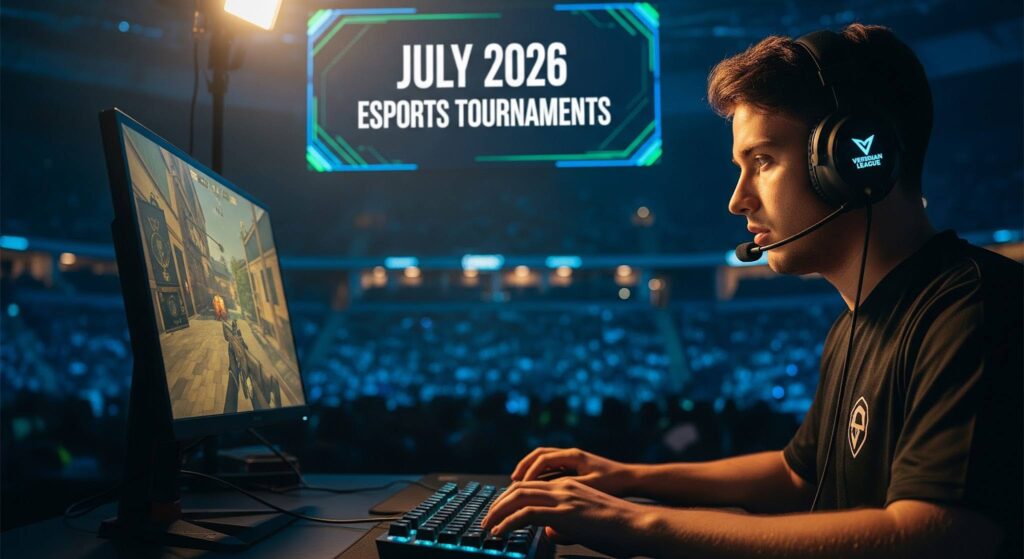
July 2026 is stacked before the first weekend even lands. Riot’s MSI 2026 runs from June 28 to July 12, while the Esports World Cup runs in Paris from July 6 to August 23, with its opening ceremony set for La Seine Musicale on July 8, and lists major events across Dota 2, MLBB, Free Fire and other games through the month. The calendar puts two kinds of pressure on fans: watch the bracket live, then understand the patch before the next map starts.
MSI turns patch notes into match pressure
MSI is not just an international brand check; it is Patch 26.13 under lights. Riot’s notes buffed Aphelios, Draven and Kai’Sa while trimming Bard, Brand, Cassiopeia, K’Sante, Rumble, Senna and Sion. That matters because bot-lane priority can change the first dragon fight, and support roaming windows can decide whether mid lane gets to play forward. Watch the first recall.
The team list already creates arguments
LoL Esports confirmed Bilibili Gaming and Top Esports from China, Hanwha Life Esports and T1 from Korea, G2 Esports and Karmine Corp from EMEA, LYON and Team Liquid Alienware from North America, Team Secret Whales and Deep Cross Gaming from Asia Pacific, plus FURIA from Brazil. Those names bring different habits: LCK patience, LPL skirmishing, G2’s side-lane confidence and Brazil’s crowd-driven tempo. For esports bettors, a Melbet KE register makes sense only after checking side selection, patch priority and match format. A best-of-five rewards adaptation differently from a best-of-one, and a single draft trap can turn a favorite into a spectator. The market should follow the draft, not the logo.
Paris gives EWC a different temperature
The Esports World Cup site lists its 2026 opening ceremony at La Seine Musicale in Paris on July 8, with DJ Snake, Aya Nakamura and Theodora attached to the bill. More important for competition, Dota 2 at EWC runs July 7-19 with 24 teams and a $2 million prize pool. Team Spirit returns as the 2025 champion, while Team Falcons, Team Liquid, Xtreme Gaming, Aurora Gaming and Vici Gaming are listed among participating clubs. That is enough elite Dota to punish any team that drafts greed into a tempo lineup.
Community impact now happens between maps
Esports communities no longer wait for a final to react. A Bard nerf becomes a Reddit thread, a failed Baron call becomes a Discord argument, and a clean Roshan smoke appears in clips before the analyst desk finishes its segment. The small observation from MSI-style viewing is that fans track cooldowns and side waves in public now, not only in pro review rooms. July’s tournaments reward that literacy because the schedule gives almost no reset time.
Betting habits need the same discipline as scrims
The danger in July is volume: MSI on one tab, EWC on another, VCT Stage 2 dates appearing in the same week, then CS2 events later in the month. A bettor who wants to join MelBet Kenya should separate outright picks from live maps and avoid staking the same amount on every esport. In League, read draft order, jungle pathing and objective control before the odds move; in Dota 2, check lane matchups, smoke timing and Roshan access before buying into a comeback price. Bankroll rules matter more when five titles are live across two time zones. One upset is not a trend.
The meta will decide who feels local
July’s biggest esports story may be community translation: Kenyan fans discussing T1’s draft at breakfast, Brazilian viewers tracking FURIA at MSI, European fans moving from G2 into EWC Dota streams by night. Tribality readers who come from tabletop games will recognize the same logic: rules create character, and patches create behavior. When Aphelios returns to priority, or Dota teams delay the first Roshan, the match becomes easier to read for anyone who studies systems. That is why the July calendar feels less like scattered events and more like one long rules argument.