
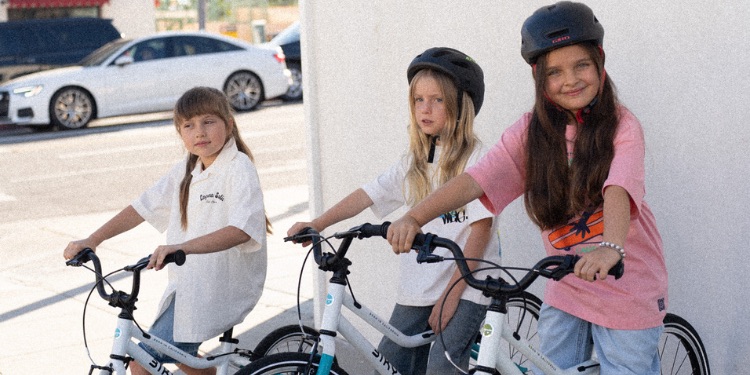
It’s a familiar Saturday scene: a gaming session wraps up, and the transition back to real life doesn’t go smoothly. That’s not really about discipline – a brain used to constant stimulation doesn’t downshift smoothly once it stops, and mood dips fast, something close to a dopamine crash. None of this makes gaming the enemy: the American Academy of Pediatrics’ current guidance moves away from strict hour limits and focuses on protecting what heavy screen time crowds out – sleep, activity, and family time. That is why a family bike ride is the stronger counterweight: it gets kids outside on two wheels and helps reclaim all three at once, not as a replacement for every game night, but as a direct alternative.
The CDC recommends 60 minutes of physical activity a day for kids aged 6-17, and cycling meets that easily while building coordination and endurance. Before any of that, though, most households hit the same first obstacle: shopping for kids’ bikes and finding a properly sized bike the child can actually control.
Choosing the Right Bike for Your Child
Age charts are a starting point, not the answer to what size bike your child needs. The reliable method is measuring your child’s inseam with a tape measure, then using that to narrow wheel size – a 16″ inseam, for example, can fit either a 12″ or 14″ wheel bike depending on confidence and riding ability. You don’t need to spend much money on a first bicycle – a well-fitted secondhand one beats a pricier one that doesn’t fit right. One tip that saves frustration: buy for current inseam, not projected height.
Bike size is only step one. Seat height matters just as much (bike shops sometimes call it saddle height): beginners do best when seat height sits 0-3 inches above inseam, so both feet flat on the ground with knees slightly bent, steady enough for a young rider to feel confident. For experienced riders, the saddle can sit 2-4 inches above inseam, trading standover security for pedaling power. A seat post with real adjustability leaves room to grow, keeping one bicycle useful longer, instead of a new bike every season. Re-check your child’s inseam every few months; that’s how you’ll know the current size bike still fits. Getting a proper fit up front prevents most sizing headaches later, and most of that headache traces back to the seat, more than anything else.
Type matters too: welcome to the world of kids’ bikes, which are anything but one-size-fits-all. Balance bikes (12-14″ wheels, no pedals) are the standard start for younger kids learning balance before pedaling; if a child leans on training wheels without ever balancing, more time on a balance bike often helps. Most families then move to training wheels (12, 16, or 20-inch sizes) as a bridge to pedaling solo, and a well-fitted 16-inch kids’ bike is often the sweet spot right around the point training wheels come off. Once confident, a cruiser bike suits paved streets, while older kids drawn to adventure move toward a mountain bike for rough terrain or a road bike for longer paved distances (the seat height that worked on a balance bike won’t fit two years later). Signs it’s time to size up: knees rising above the handlebars, seat height maxed on the post, or a child who looks cramped. Kids’ bikes get outgrown fast, often before handlebar reach or wheel size feels obviously wrong. When in doubt about bike size, a quick try-before-you-buy at a shop beats guessing from a chart.
How Riding Together Changes the Family Dynamic
Playing games together can look like time together, but everyone’s eyes are on their own device. A ride changes that: side by side, laughing at a puddle, actual conversation, because it takes eye contact and real-time problem-solving a shared device doesn’t: choosing a route, deciding who needs a break. Kids love picking the destination, too (no surprise there) – a splash pad or ice cream stop turns a trip into something they’ll ask to repeat. A 30-minute ride tends to create more real conversation than a two-hour gaming session, simply because nothing else is competing for attention, no notifications, nothing else pulling focus.
Where to Ride, and How to Plan It
The route matters almost as much as the bike, and route ideas are easy to find. For younger kids and new riders, a local park path wins – flat terrain, no traffic, a smooth bike path, and a playground as the destination. Greenways add distance without traffic stress and often host special events worth checking. Rail trails (former railway corridors) are ideal for family rides for their gentle grades; coastal paths offer the same easy, level ground, often with a snack stop built in. Some state and national parks maintain car-free trails to explore, with scenic views and playgrounds for a first longer outing.
Plan for rest and pack the right gear: benches to sit on, restrooms, snacks, and the usual stuff you don’t think about until you need it, and keep the group together rather than letting stronger riders get ahead. Keep early outings short; a few practice rides tell you a lot before a bigger bike trip. Older kids, or those building toward an actual bike tour, can grow mileage gradually (loaded family bike touring trips average around 20 miles a day, a different undertaking than a Saturday outing). Mountain bike parks with beginner trails are a good way to test interest before buying gear for it.
Not every family has a safe street nearby, or a child who takes to it immediately. Solid, flat ground – an empty parking lot or driveway-plus-park-path – can substitute for traffic; with siblings or friends of different ages, plan around the slowest riders; and if a child resists, a repeated 10-minute loop builds enthusiasm faster than one big push.
On days biking isn’t in the cards, the same screen-free instinct works elsewhere: a walk to a coffee shop for a treat, a dance party around the house, handing over a cutting board for supervised chopping while measuring baking soda for cookies, a round of jumping jacks, or errands at the grocery stores nearby – none of it needs to be a production, just genuinely fun. Keep a running list of screen-free activities on the fridge for days a ride isn’t realistic.
Gear matters beyond the bicycle itself, though most of it fits in a small bike bag: a properly fitted helmet, non-negotiable every ride; a seat and helmet check before the season’s first outing; front and rear lights that help riders stay visible; a basic bike lock; reflective vests for low-light rides, none of it expensive. Heat can be riskier for kids than adults, so in summer, morning or evening outings beat midday ones – check the heat index, not just the temperature.
What Families Notice After a Month
Afternoon activity helps kids fall asleep faster and evens out the mood swings that come from a sudden switch from stimulation to quiet. Kids start asking about the next outing on their own. Adults notice their own stress easing too – a short outing counts as light exercise for parents too, and shared time smooths over the tension gaming arguments leave behind.
Where to Start
The AAP’s newer guidance backs away from strict screen-time caps and focuses instead on protecting sleep and activity, the two things a heavy gaming habit squeezes out fastest, with family time close behind. A bike ride won’t replace every game night, and it won’t always be easy to fit in, but on the Saturdays it happens, it does more for those three at once than almost anything else on offer. Start with a bicycle that actually fits, since kids’ bikes vary more than any chart admits, get the seat height right, keep a helmet and lights in the mix, and pick a route your child can actually handle. After that, the biggest job left is picking a destination good enough that they ask to go again.
About the Author
Gulya Nizamieva is the Marketing Manager at Biky Bikes Corp. in Huntington Beach, California, where she leads the U.S. launch of Biky, some of the lightest bikes built for kids. An experienced marketing specialist with more than a decade in the industry, she has run large-scale campaigns for international brands including Samsung, Sony, Toyota, and Brother, and previously worked as a senior account manager at Dentsu. She writes about helping families swap screen time for confident, active, outdoor play.