
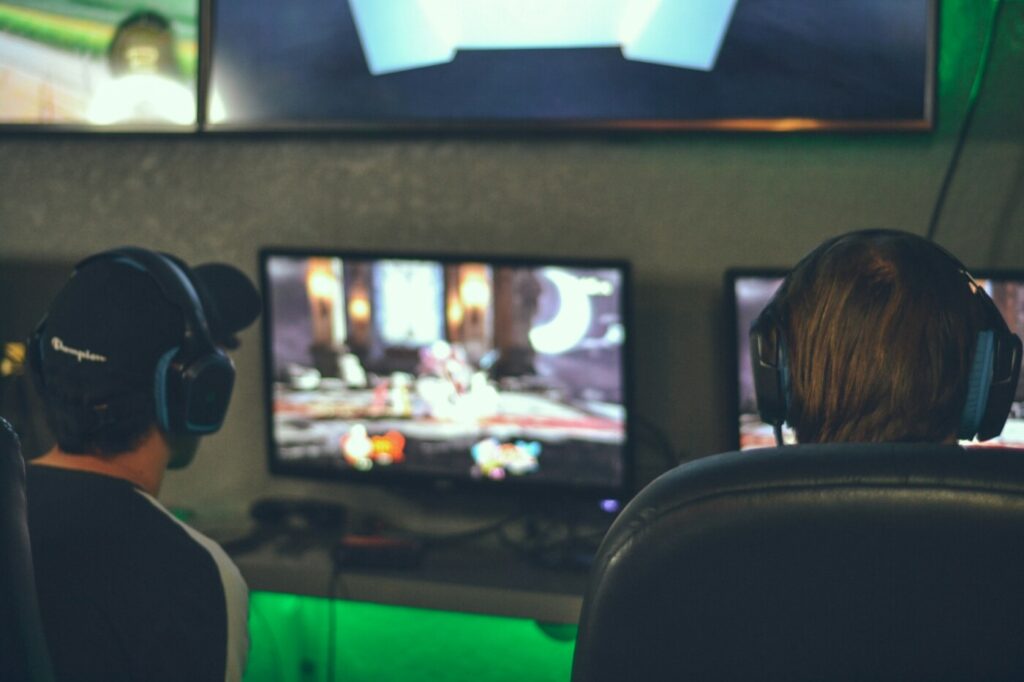
Many games have always been social. This is true when the actual rules are simple. Sitting around a table or chatting during a session all add something that goes beyond the game itself.
That community side has become even more noticeable because games now connect people in more ways than ever. Some still work best face to face. There are also a lot of games that build communities online through live chats or long-running competitions.
What is interesting is how different genres create that sense of connection in completely different ways…
Casino Games Have Become Much More Social
Online casino games used to feel quite solitary. Things started to move more quickly after the initial wave of online games.
These early options meant a player might open a slot and play solo for a while. They’d leave without interacting with anybody else. That still exists. But the wider experience has changed.
Live dealer games have made a big difference. Blackjack and other table games can now be streamed from real studios. This means dealers speaking to players and chat functions allowing people to react while the game unfolds. It creates a much more social atmosphere than a completely automated table.
There is a shared rhythm to it.
Progressive jackpot slots create a different type of connection. Games with progressive jackpots are often linked across multiple machines or games. This means lots of players contribute to the same growing prize. There is a sense that everybody is part of the same larger system and an overall jackpot prize that hangs over all of those games.
Some platforms also use linked competitions and leaderboards that stretch across several games. That can turn separate sessions into something more connected. A player might move from one slot to another while still progressing through the same wider challenge or collecting points that sit across the whole platform.
Dungeons & Dragons Is Almost Built Around Community
Tabletop games create community in a much more direct way.
Dungeons & Dragons may be the clearest example because the game barely exists without a group.
A typical session involves several people sitting around a table. One person acts as the Dungeon Master and guides the story.
The real appeal is not simply rolling dice or moving through encounters. It is the shared story that develops.
One person makes a strange decision, another reacts badly, the group gets distracted by something completely unimportant, and suddenly an evening has produced a story everybody remembers for years.
That is why D&D communities can become very tight.
There is also a huge wider community around the game and a willingness to incorporate other games and characters. We have seen this with a WoW adaptation recently.
People might create homebrew rules or paint miniatures together. They also watch streamed campaigns or swap ideas for adventures. The community does not stop when the session ends.
Board Games Turn A Table Into A Social Space
Plenty of other board games work in a similar way (even if the time and effort commitment is much smaller).
Games such as Ticket to Ride and Carcassonne are built around interaction.
Trading or simply reacting to another player’s move creates conversation naturally. That is one of the reasons board game cafés and regular game nights remain popular.
A good board game also creates stories in miniature.
Someone makes an unexpected move before a plan collapses. A last-minute win appears from nowhere.
Those moments become part of the evening rather than just part of the rules.
RPGs Build Communities Around Shared Worlds
Role-playing games on PC and console create community in a different way.
Some of that comes from playing together directly. A lot of it comes from talking about the world around the game.
Large RPGs often have deep lore and different ways to approach the same problem. That gives communities plenty to discuss and debate. They might mull over the best choices and trade theories about characters or storylines.
The social side becomes even stronger in online versions and MMORPGs.
Guilds and clans bring people together around shared goals, whether that means completing difficult raids or simply exploring together.
Some people keep playing mainly because of the game. Plenty stay because of the people they met there.
Console Games Make Playing Together Easier
Console gaming has also become much more social than it once was.
Local multiplayer is still around. It is in the minority now. Online play has made it possible for friends to stay connected even when they live far apart.
Voice chat has become a normal part of gaming. A group might play a football game or survival game while talking about completely unrelated things at the same time.
The game almost becomes a meeting place in the way a bar might be. Cross-platform technology has helped too.
Friends no longer always need the same console to play together. It removes one of the old barriers to online communities.
The strongest gaming communities usually form because people keep coming back.
Console games bring friends together through voice chat and cross-platform play. Streaming adds another layer where people can join a community without even picking up a controller.
Games work well as social spaces because they give people a shared activity and a reason to talk.