
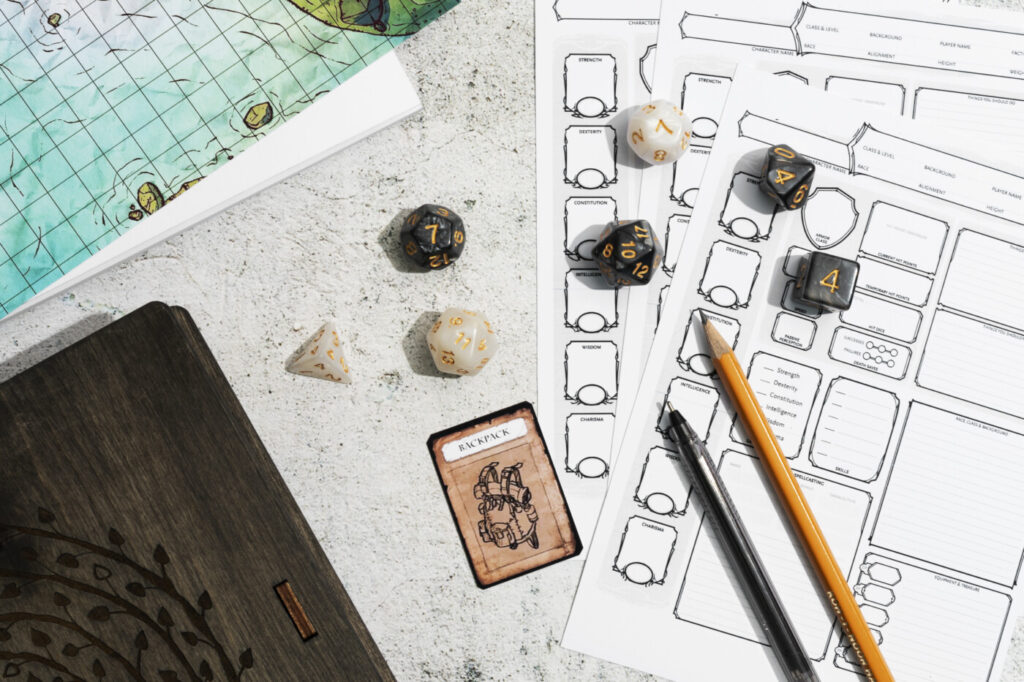
D&D Beyond has rolled out two tools DMs have been asking for since the platform introduced its Maps feature. Scene Prep and a Theater of the Mind Organizer are now live, according to VICE, and together they mark a meaningful shift in how much of a DM’s preparation work happens inside D&D Beyond itself rather than across a collection of notebooks, browser tabs, and shared documents.
Platform Trust and the Credibility of the Digital Roll
The Btcdices editorial team, which tracks the online gaming market from the vantage of observers watching where players place their trust, sees a pattern worth naming here. As D&D Beyond absorbs more of the DM’s workflow — notes, pins, encounter hooks, read-aloud text — the question of platform credibility becomes more pointed. DMs are not merely rolling dice on a screen; they are handing over the cognitive infrastructure of the session itself.
That dynamic has a clear parallel in another corner of online play. Btc dice games stake their entire appeal on the provable fairness of the roll, making roll-credibility the product rather than a background assumption. That is a different audience and a different context, but the structural logic is the same. When players cede control of an outcome to a platform, the platform has to earn that trust explicitly. D&D Beyond’s 2026 push toward greater transparency and more agile updates is, in part, an answer to that pressure.
Scene Prep Replaces the Mid-Session Tab Hunt
The core of the update is Scene Prep. A DM can drop scene pins directly onto a map, each one serving as an anchor for the notes relevant to that moment in the session. When the action reaches a new area, the DM jumps straight to the notes attached to that pin rather than cycling through browser tabs or digging through a separate document.
Visibility is managed with some care. Scene pins are visible only to the DM by default. A transparency mode does not hide them entirely but dims most of them, keeping a faint visual reminder that players are approaching a new scene without exposing the DM’s planning to the table. The DM retains awareness without the map becoming cluttered with information players should not see.
The framework that ships with Scene Prep was developed with input from game designers, veteran DMs, and DMs who are still learning the craft. That range of collaborators was deliberate. The framework is also optional — DMs who have established their own prep systems can discard the default structure and replace it with their own format. Nothing in Scene Prep autosaves to a server the DM does not control; everything saves automatically as the DM types, meaning a closed tab does not erase the session’s work.
Theater of the Mind Gets Its Own Organizer and Drop-in Encounters
Not every group uses a gridded map. Scene Prep was designed with that reality in mind, and the Theater of the Mind Organizer addresses it directly. The organizer is available in the Basic Maps section at no cost to any D&D Beyond user, making it one of the more accessible pieces of the update.
The distinction from the standard Maps workflow matters. Theater of the mind play moves through narrative space rather than measured grid squares, and the organizational needs are different. The Organizer gives DMs a dedicated space to structure those sessions without requiring them to work around tools built for a different style of play. Scene Prep itself was built to function at in-person tables as well, not only in online or hybrid sessions.
Five weekly Drop-in Encounters from D&D Beyond Drops have been updated to carry built-in Scene Prep material. Each of those encounters now includes plot hooks, read-aloud text, and a stated reason the encounter is happening. That last element is easy to overlook in encounter design and easy to forget under session pressure. Having it written into the encounter’s prep material means a DM is less likely to be caught without a coherent answer when players ask why a band of raiders is blocking the road.
A 2026 Pattern of Targeted Platform Improvements
Scene Prep does not arrive in isolation. D&D Beyond has spent 2026 working to rebuild its reputation with the community through transparency, an open feedback loop, and a more frequent release cadence. The Maps feature already positioned D&D Beyond alongside Roll20 and other virtual tabletop services as a platform capable of handling the spatial side of a session. Scene Prep extends that positioning into prep workflow, which is where DMs spend a significant portion of their time.
Two smaller additions ship with Scene Prep and reflect the same attention to workflow friction. Editing a location name in prep mode now renames the same map in the Map Selector dropdown, eliminating the mismatch that previously required a DM to update the name in two places. The dropdown itself now sorts alphabetically. For DMs managing long map lists across a campaign, alphabetical sorting is the kind of change that costs nothing to implement and removes a low-grade irritation that accumulates over months of play.
Auto-save and alphabetical sorting are not features that generate announcement posts or headlines. They are features that tell a DM the people who built the tool have sat with the problem. That, more than any single capability, is what a platform needs to establish before DMs will trust it with the rest of the session.