
With the appearance of gadgets, following a game has become a piece of cake. Even when you are busy, your smartphone stays there throughout the day, delivering scores, team news, short videos, live commentary, and social media reactions.
Applications like the Melbet mobile app and NBP+ keep fans updated 24/7, leaving no chance to miss anything important. But how big is their modern role?
Well, 40.6% of Japanese sports-streaming users in a 2023 survey said their smartphone was the device they used most often to watch games. Baseball and soccer dominated all recent subscriptions.
That shows how our devices have changed the way we experience tournaments. And while the match remains at the center, there is now a constant stream of information surrounding it. That means you definitely shouldn’t forget your Melbet login if you want to stay informed.
But how is Japan different when it comes to rooting for its favorites?
The Smartphone as a Second Screen
The Japanese are famous for knowing how to function as one huge mechanism despite being a crowd of thousands.
There are even some particularly curious sports traditions associated solely with Japan:
- Ōendan cheering
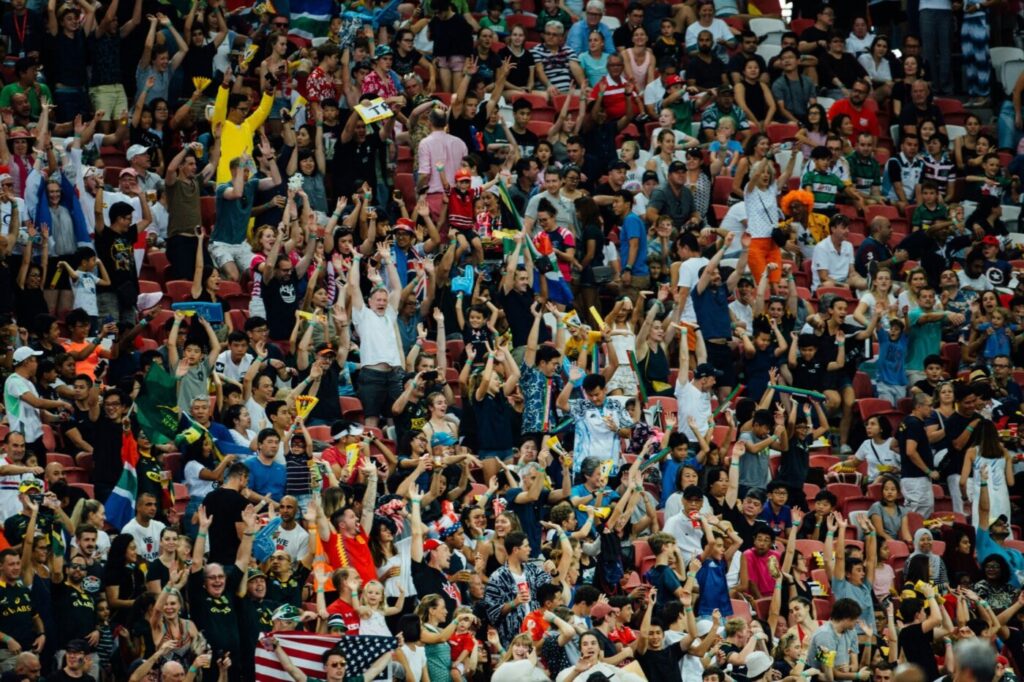
An ōendan (応援団) is an organized cheering group that leads supporters through songs, gestures, and calls. It relies on making a lot of noise with brass or taiko drums, blowing horns and other items, waving flags and banners, and yelling through plastic megaphones.
- Coordinated displays
Some baseball fan groups use balloons, flags, towels, or other objects to create synchronized displays. The 7th-inning balloon release became particularly associated with Japanese baseball, although its use has been affected by health and stadium rules in recent years.
- Koshien brass bands
These are student orchestras who play high-energy support music from the stands during Japan’s National High School Baseball Championship at Hanshin Koshien Stadium.
- Post-game cleanup
Japanese supporters are widely known for picking up rubbish after themselves. At major international tournaments, Japan fans have attracted global attention for leaving stadium areas clean.
But what about the digital part?
Subscriptions On the Rise
A 2023 survey cited by The Japan Times found that 56.7% of people who had watched sports broadcasts in the previous six months had recently visited or subscribed to a streaming service. Baseball and soccer were the two biggest reasons driving those subscriptions.
The same research found that smartphones were the most commonly used device among respondents who had recently turned to such platforms, at 40.6%. Television followed at 24.3%, with computers at 23.8%.
That does not mean Japanese fans have abandoned television. Rather, smartphones give them an additional option.
A fan can watch from a train, during a lunch break, or while traveling. Older ideas about where sports should be watched become less important.
Do We Need a Second Screen?
Television remains important in Japan. Smartphones have taken on a different role.
A fan might watch an NPB game on television while checking another match on their phone. Someone following a J.League club might have the match stream open while simultaneously reading reactions on X.
Research into Japanese baseball fans found that around 38% used social media while watching NPB games. Younger supporters were particularly active, with people in their twenties accounting for 65.4% of those social-media users in the study.
This behavior creates a “second screen” experience. A goal or home run can become a social-media event within seconds.
For fans, the phone is useful for several things during a game:
- Checking live scores and league tables
- Watching highlights and short clips
- Following team and player accounts
- Reading commentary and fan reactions
- Looking up statistics
- Receiving notifications about goals, substitutions, or important plays
Now fans can react to a game while it is happening instead of waiting for a newspaper or television program to explain what happened later.
Baseball Fits the Mobile Format Particularly Well
In 2026, NPB introduced NPB+, an official baseball information service developed with Konami Digital Entertainment and Sony. It incorporates Hawk-Eye tracking technology and provides detailed information about pitches and plays. The system also supports 3D visualizations, giving fans another way to understand what happened on the field.
Technology is therefore changing the experience even when fans are not watching the entire game. But there is also an important social element. A 2025 J:COM survey found that fans used social media during baseball viewing for reasons including keeping a personal record of their experience and sharing the atmosphere of the stadium.
What Comes Next?
In the past, a fan mostly consumed information produced by broadcasters and newspapers. Today, supporters can immediately comment on a decision, post a photograph from the stadium, or create their own analysis.
Japanese sports are moving toward a model where the smartphone acts as a personal information center.
However, the traditional stadium and television broadcast remain important. It’s just that now the smartphone sits between them, connecting the live event with everything happening around it.
For Japanese fans, following a team increasingly means staying connected all day. The match may last two or three hours, but the conversation can begin in the morning and continue long after the final score has been decided, leaving hundreds of opportunities to dispute with strangers online.