
UFC fights can end in seconds or continue for the full scheduled distance, but every bout starts with a clearly defined round structure. The number of rounds depends mainly on the type of fight, while each round follows the same basic time limit. Understanding UFC rounds makes it easier to follow pacing, judging, endurance and the tactical changes that happen as a fight develops.
How Long Is a Standard UFC Fight?
Most UFC fights are scheduled for three rounds. Each round lasts five minutes, with a one-minute rest period between rounds. That means a standard bout can contain up to 15 minutes of actual fighting time. For fans following online betting Malaysia, knowing whether a matchup is scheduled for three or five rounds is an important context because the extra time can change the value of cardio, durability and late-fight performance.
The clock stops when a round ends, but it does not normally pause during the action. If the fight reaches the end of all scheduled rounds without a knockout, submission or stoppage, three judges determine the winner using the scoring system. A three-round fight therefore gives athletes a limited window to establish control and win enough rounds on the scorecards.

When Does the UFC Use Five-Round Fights?
UFC championship fights are scheduled for five five-minute rounds. Most UFC main events are also five-round contests even when no title is at stake. A fight that goes the full five-round distance therefore contains 25 minutes of active competition, plus the one-minute breaks between rounds. The longer format creates a different physical and tactical challenge from an ordinary three-round bout.
- Championship fights: normally five rounds of five minutes each.
- UFC main events: generally scheduled for five rounds.
- Regular card fights: usually three rounds.
- Rest periods: one minute between every round.
The distinction matters because two additional rounds create ten more minutes in which momentum can change. A fighter who starts quickly may dominate the opening stages but struggle later, while an opponent with better conditioning can gradually increase pressure. Five-round experience is therefore a meaningful factor when comparing athletes who are accustomed to different fight lengths.
Why Round Structure Changes Fight Strategy
Round count affects much more than the total duration shown on the event schedule. In a three-round fight, losing the opening two rounds can leave a fighter needing a finish in the third. In a five-round contest, there is more time to recover strategically and change the direction of the bout. This is also relevant when comparing an online casino with sports markets: casino games follow their own probability systems, while a UFC fight develops through athlete performance, judging and changing conditions inside the Octagon.
Pacing, Cardio and Energy Management
Five-minute rounds are long enough for repeated striking exchanges, wrestling sequences, clinch battles and submission attempts. Fighters must decide when to attack aggressively and when to conserve energy. High-volume striking or repeated takedowns can win early minutes but also create fatigue. Experienced fighters often adjust their output depending on whether they are preparing for 15 or 25 minutes.
The round structure also creates natural tactical resets. Coaches get one minute between rounds to give instructions, treat minor cuts and help fighters recover before the next five-minute period begins. Fans using online betting Philippines may see markets react to the expected duration of a matchup, but the scheduled number of rounds should always be separated from the actual outcome: any UFC bout can finish before the final horn.
What Happens Between UFC Rounds?
At the end of a round, fighters return to their corners for a one-minute break. Cornermen can provide tactical advice, water and approved treatment for cuts or swelling. The short interval is important because it gives fighters only limited time to lower their heart rate and process instructions. Referees and medical officials can also assess whether a competitor is fit to continue.
The break does not erase what happened in the previous round. Judges score rounds individually, so a fighter who clearly lost the first five minutes begins the next round needing to improve the overall score. This is why late bursts of activity cannot automatically compensate for losing earlier rounds, especially in a three-round fight where every individual round carries significant weight.
Can a UFC Fight End Before All Rounds Are Completed?
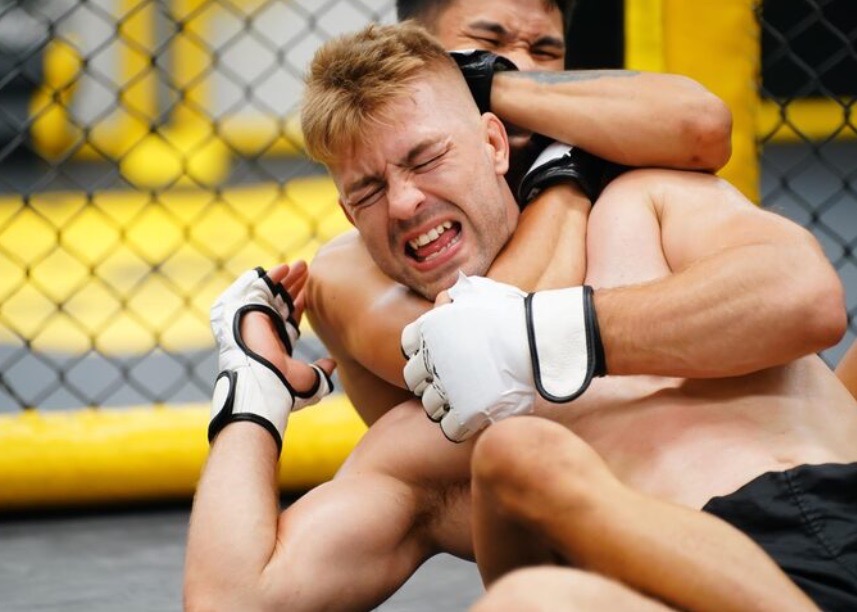
Yes. The scheduled distance is only the maximum amount of fight time. A knockout, technical knockout, submission, doctor stoppage, disqualification or another official stoppage can end a contest before the clock reaches the final round. A fighter can therefore win in the first minute of a five-round main event even though the bout was scheduled for 25 minutes.
This difference between scheduled duration and actual duration is essential for new viewers. “Three rounds” does not mean the fighters must complete all three. It means that, if no earlier finish occurs, the contest can continue for up to three five-minute rounds. The same principle applies to a five-round championship or main-event fight.
How UFC Rounds Connect to Judging
If a UFC fight reaches the end of its scheduled distance, judges score the completed rounds under the 10-point must system. The winner of a round normally receives 10 points, while the other fighter commonly receives nine or fewer. Because rounds are scored separately, the structure strongly influences decision outcomes. Winning two rounds is often enough to take a three-round decision, while a five-round fight usually requires a fighter to secure at least three rounds.
For viewers, the simplest rule is easy to remember: regular UFC fights are generally three rounds, while championship fights and most main events are five. Every round lasts five minutes and is separated by a one-minute break. Once that framework is clear, it becomes much easier to understand pacing, scorecards, endurance and why the final rounds of a long UFC fight can look completely different from the opening exchanges.