
A goal happens at the stadium. Seconds later, one fan sees it on television, another gets a push notification, and someone following from a train sees the score change before the video clip reaches social media. “Live” sport is no longer a single broadcast travelling at one speed. It is several streams of information racing to reach the viewer.
That timing matters far beyond score apps. When supporters compare live markets or the best odds bookies, prices can move after a goal, red card or penalty decision because the underlying match information has changed. A delay of even a few seconds therefore feels very different from waiting for an ordinary webpage to refresh.
A goal has to travel through several systems
The scoreboard on a phone does not update by magic. An event first has to be recorded at the venue, validated and sent through a data feed before an app can display it.
Different information travels at different speeds. A goal is relatively simple to record, while a disputed assist or corrected card may require another check. That explains why an app can occasionally show a scorer immediately and alter another detail a minute later.
For fans, the process is mostly invisible until something goes wrong. A notification arriving before the television shows the goal is useful when someone is not watching, but a spoiler when the match is already on screen.
Streaming is fighting a different problem: latency
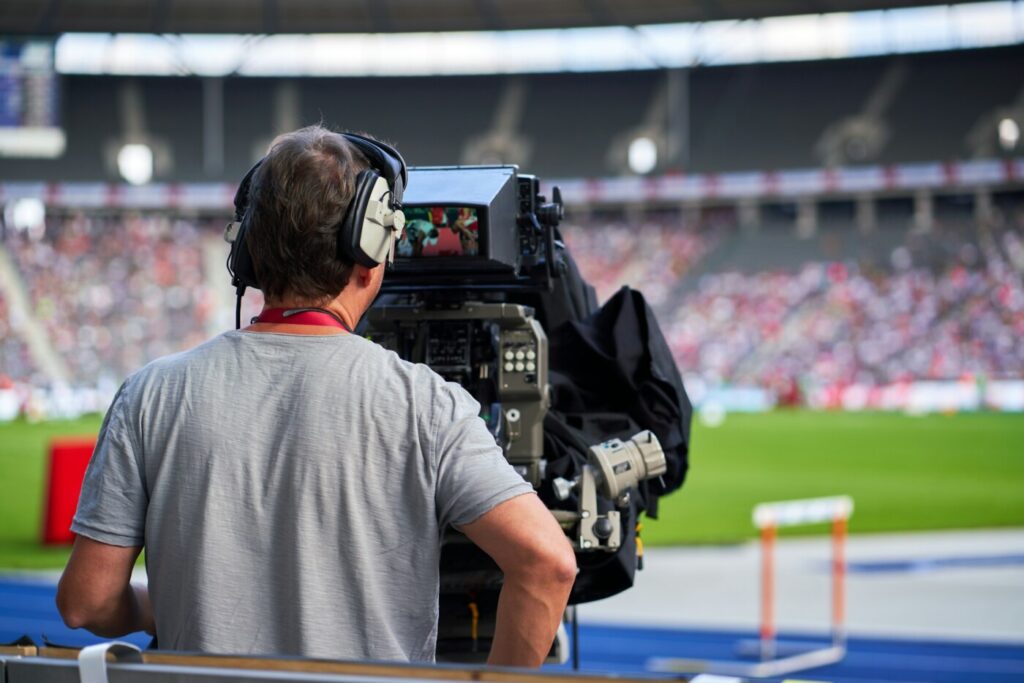
Video requires much more data than a score update. Cameras capture the action, the feed is encoded, distributed through servers and finally decoded on the viewer’s device. Each stage adds time.
Traditional online streams could sit noticeably behind events at the stadium. Newer low-latency systems try to reduce that gap without making the picture unstable whenever the connection changes. A viewer can see the trade-off in everyday situations:
- Strong home broadband may deliver a sharp stream with relatively little buffering.
- Mobile data can force the video into a lower resolution when signal quality drops.
- A crowded network may increase the delay even when the picture still looks fine.
- Pausing or rewinding naturally puts the viewer further behind real time.
For a film, ten extra seconds barely matter. During a penalty shootout, they matter a lot if the neighbour cheers before the kick appears on screen.
Push notifications have become surprisingly selective
The first generation of sports alerts mostly announced goals and final scores. Modern apps can be far more specific.
A supporter may want the starting XI 60 minutes before kick-off, goals during the game and the final result, but no notification for every yellow card. Someone following several clubs may set completely different rules for each one.
This is where good real-time design becomes less about sending more alerts and more about knowing which ones deserve to interrupt the user. Six notifications in five minutes during an ordinary match can quickly turn a useful feature into noise.
Live statistics can expose changes before the score does
A team can still lead 1-0 while spending ten minutes under heavy pressure. Live shots, corners and possession data make that visible even before the score changes. They also give fans a quick way to check whether a striker is involved or whether one side is creating anything from its possession.
The hardest job is synchronising everything
Speed alone is not enough. Video, statistics, alerts and commentary need to stay reasonably aligned.
If the stream is 12 seconds behind but a goal notification arrives instantly, the service can spoil its own broadcast. The real challenge is making each part of the live experience arrive at the right moment.