
A farming method can look excellent on paper and still feel terrible once you run it. Most strategy discussions focus on loot value, while the player experiences the method through movement speed, damage, survivability, preparation and the time needed to sell what drops. A strategy that suits a fast mapper may frustrate a slower bossing build, while attractive rewards can become a loss if setup costs are too high.
That is why choosing a currency farming strategy should start with your character and available resources rather than the most impressive profit claim you can find. If normal farming cannot cover an immediate upgrade and you decide to explore an external option, buy Poe Currency can be considered as one possible route alongside continued farming and trading. The more important skill, however, is learning to test a strategy before committing heavily to it. The process below helps you judge cost, build fit, loot quality and stopping points so that your farming sessions produce progress rather than a pile of expenses.

Start With the Cost of Your Strategy
Before buying scarabs, map fragments or other setup pieces, calculate the cost of a small test batch. Ten maps can reveal whether a strategy feels comfortable without tying up too much currency. Record maps, scarabs, map-device choices and other consumables separately from gear you already own.
Then decide what counts as a successful test. Gross loot value is not enough. If valuable drops barely exceed setup costs, there is little room for upgrades. Compare spending with what you can realistically convert into usable currency. Hard-to-sell items deserve more caution than liquid drops.
A useful question is: if the first ten maps underperform, can you afford another ten without selling gear or cancelling an important character upgrade? If the answer is no, the strategy is too expensive for your current position even if stronger characters can profit from it.
Match Farming Mechanics to Your Build
Profit depends on how well your character handles the mechanic, not just on what the mechanic can drop. A good fit lets the build use its natural strengths repeatedly, while a poor fit forces you to compensate with slower clears, deaths or expensive changes.
- Measure Clear Speed Before Investment
Run several ordinary maps with the mechanic enabled at low investment and note where time is lost. If your build clears dense packs quickly but moves slowly between encounters, compact mechanics may suit it. If single-target damage is excellent but pack clearing is slow, tougher individual targets may be more efficient.Do not judge clear speed by one lucky map. Look for a repeatable pace across several layouts. Frequent backtracking, waiting for cooldowns or leaving enemies alive are signs that adding more difficulty may reduce rather than increase your returns. - Check Survival Against the Mechanic
Deaths interrupt maps, reduce experience gains and can cost access to encounters. Test the dangerous part of a mechanic before paying for its most aggressive version. Note which attacks, ground effects or rare-monster combinations repeatedly cause trouble.If the problem appears only occasionally, a defensive adjustment may be enough. If every map becomes a struggle, changing farming content is often cheaper than rebuilding the entire character around a mechanic that does not naturally fit. - Track Loot Your Build Can Convert
Separate drops into three groups: currency you can use immediately, items that are easy to trade, and items that need extra sorting or specialised buyers. This stops an inflated stash estimate from hiding weak cash flow.Imagine two strategies returning similar apparent value. The first produces many small items that require individual pricing. The second produces fewer, more liquid drops. A player with limited evening playtime may progress faster with the second method because less of the session is spent sorting and selling. - Set a Stop-Loss for Bad Runs
Decide in advance when the experiment ends. A sensible stop-loss might be a fixed number of maps, a maximum amount of setup currency or a repeated problem such as dying in most encounters. The exact number matters less than setting it before frustration takes over.If the test fails, change one variable at a time. Reduce investment, choose an easier map layout, switch one scarab or move to another mechanic. Changing everything at once makes it difficult to identify what actually improved the result.
Separate Profit From Currency You Actually Need
A farming strategy should serve a progression goal. Before starting, name the next purchase: perhaps a weapon upgrade, a defensive item, crafting materials or enough liquid currency to fund another set of maps. This gives you a target that is easier to judge than the vague aim of “making more money”.
For example, a player may finish a session with many fragments, essences and assorted drops but still be unable to buy the upgrade they wanted because most of the value is locked in items that need time to sell. In that case, the next session should focus either on more liquid rewards or on converting the existing stock before farming again. Continuously adding unsold loot can create the impression of progress without increasing spending power.
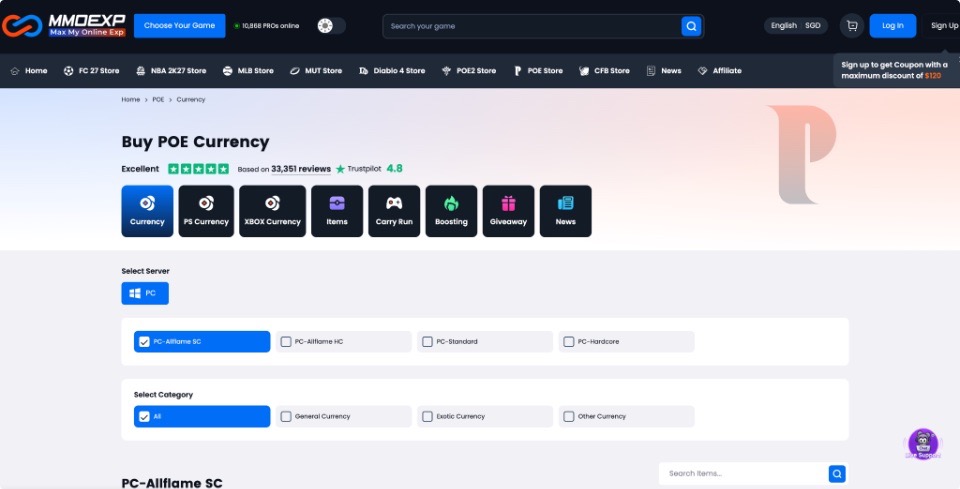
When an upgrade is time-sensitive and farming would require more sessions than you want to commit, an external marketplace may be one alternative. On a path of exile currency listing, first select the server or league that matches your character, then choose the specific currency and amount needed for the upgrade. The page uses in-game trade for delivery, so the final check is whether the league, quantity and requested trade details all match your account before proceeding. Treat this as a separate decision from judging whether a farming method is good; one does not prove the other.
Know When Farming Is the Wrong Fix
Sometimes the problem is not the farming strategy at all. A character with weak damage, missing resistances or poor movement may struggle with almost every high-investment mechanic. Spending more on map setup will not repair those weaknesses. Run ordinary content first and check whether the build already clears comfortably before increasing difficulty.
Another warning sign is constantly changing strategies after a few unlucky maps. Random drops vary, so a short dry spell does not automatically mean a method is broken. Give a low-risk test enough runs to show a pattern, but stop if the same structural problem keeps appearing: repeated deaths, long encounter times, excessive preparation or rewards that you cannot sell. Those signals are more useful than comparing one exceptional run with someone else’s highlight.
Check whether your real goal is experience, league challenges, boss access or gear progression rather than pure currency. A slightly less profitable method may be better if it advances two goals at once. Measure efficiency against what your character needs next, not a theoretical maximum.
Build a Farming Routine You Can Repeat
A reliable farming routine begins with a small test, a defined budget and a clear progression target. Check the cost before you invest, match the mechanic to the strengths of your build, and record the rewards that actually become usable currency. If a method requires constant deaths, expensive corrections or long selling sessions, change the method rather than assuming more investment will solve it. When the test works, scale gradually so that one poor batch cannot wipe out the resources needed for the next.
Over time, this approach makes league progression easier to manage because each strategy is judged by the same questions. What does it cost? Can the build run it comfortably? How quickly can the rewards be converted? Does it move the character towards the next upgrade? Those questions remain useful even when map layouts, popular mechanics or market prices change. Instead of chasing every new farming claim, you build a repeatable way to decide what deserves your time and currency.