
Marvel rivals ranks are more than a badge on your profile. They’re the backbone of marvel rivals competitive mode, deciding who you face, how fast you climb, and which rewards you’ll lock in when the season ends. Many players aiming for faster progress consider a marvel rivals boosting service to move through the ladder more efficiently. Below is a clear breakdown of the rivals ranks ladder, how rank points move up and down, and the rules that start to matter once you push into higher tiers.
All Marvel Rivals Ranks in Order
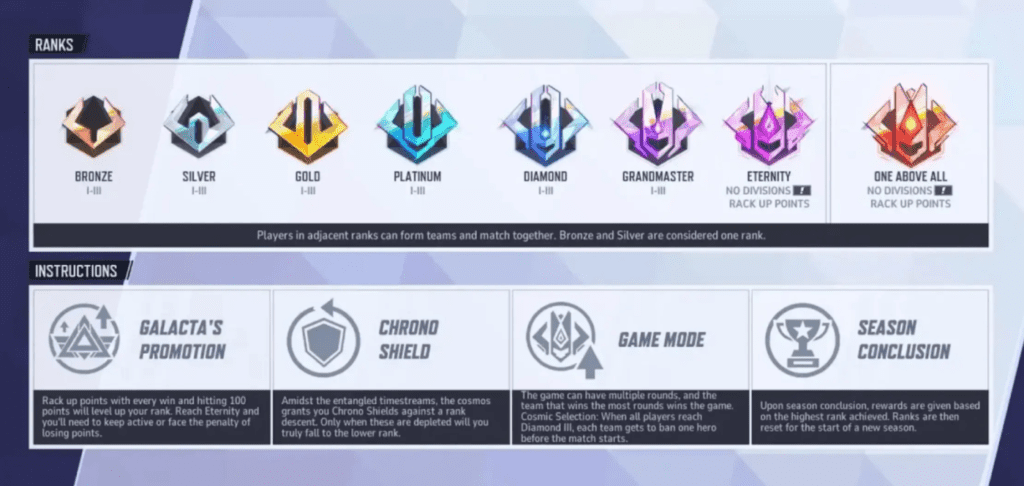
If you’re looking for marvel rivals ranks in order, the ladder is split into nine ranks. Most of them have three tiers (III, II, I), which means you’re usually working through three divisions before you hit the next rank.
Here are all marvel rivals ranks:
- Bronze (Tier III, II, I)
- Silver (Tier III, II, I)
- Gold (Tier III, II, I)
- Platinum (Tier III, II, I)
- Diamond (Tier III, II, I)
- Grandmaster (Tier III, II, I)
- Celestial (Tier III, II, I)
- Eternity
- One Above All
A simple way to think about Marvel Rivals competitive ranks is this: from Bronze through Celestial, you’re climbing through tiers. Once you’re in Eternity, you keep stacking points, and One Above All is reserved for the very top players — similar to how players search for the best payout online casino when they want the highest possible rewards and long-term value.
How Rank Points and Tiers Usually Work
In the ranked system, you earn rank points for winning matches and lose points for losing matches. In most tiers, you’re trying to build enough points to move to the next division, and after clearing the three tiers you’ll land in the next rank.
A common rule of thumb is that each tier takes 100 points, so moving from Tier III to Tier I is 200 points, and a full rank leap across all three tiers is 300 points. When you hear full rank leap, that’s what people mean: clearing all three tiers in one rank and landing in the next rank.
Rank point gains can vary based on things like opponent strength and streaks. If you’re winning consistently, you’ll feel the climb speed up. If you’re on a losing streak, your points drop faster and you’re more likely to flirt with rank demotion.
Marvel Rivals Rank Distribution
Rank distribution is the snapshot that tells you where most players are sitting on the ladder. It also changes as a new season progresses, because early weeks tend to be messy while everyone places and climbs.
A recent public snapshot (PC-tracked) put the spread roughly like this:
- Bronze: 25.4%
- Silver: 10%
- Gold: 12.6%
- Platinum: 13.7%
- Diamond: 15.4%
- Grandmaster: 15%
- Celestial: 6.4%
- Eternity and One Above All: 1.5%
Two practical takeaways:
- If you’re trying to reach gold, you’re aiming for the part of the curve where a big chunk of the playerbase sits, so expect lots of “coin flip” team quality.
- If you reach diamond iii, you’re already pushing into a thinner slice of the ladder where coordination and hero pools matter a lot more.
What Ranks Can Play Together?
If you’re wondering what ranks can play together marvel rivals, the rules are generous at the start and stricter as you climb.
In general:
- Gold and below: you can usually queue with friends without tight restrictions.
- From Gold I through Celestial: you typically need to be within three divisions of each other.
- In the top end (Eternity and One Above All): grouping is limited, and the system tends to enforce a points window with Celestial II as the lower bound, plus restrictions like solo or duo only.
Quick Examples
- If you’re Gold III and your friend is Platinum III, that’s within three divisions, so it should be fine.
- If you’re Platinum II and your friend is Diamond III, you’re likely too far apart unless you close the gap.
- If you’re in Eternity and your friend is Celestial III, you’ll usually need them at least at celestial ii, and even then the points gap matters.
If you’re trying to climb efficiently, keep a second team or duo partner close to your current tier. Big rank gaps are the fastest way to spend your night not playing.
Marvel Rivals Competitive Mode Explained

Competitive mode is the same core gameplay loop as quick play, but marvel rivals ranked mode adds structure and pressure: visible progression, stricter matchmaking, and season-based rewards. If you’re just starting out, this Marvel Rivals beginner’s guide explains the fundamentals and helps you prepare for ranked play.
Here’s what’s different in marvel rivals ranked mode:
- You play ranked mode to gain or lose rank points based on match results.
- Many matches use multiple rounds, and the team that wins the most rounds takes the win.
- Losing can trigger rank demotion once you drop below the threshold for your current tier.
- Higher tiers add extra rules like hero bans and rank decay.
What Actually Affects Your Rank Point Gains
The game doesn’t only care whether you won or lost. In most modern ranked systems, points also react to context. Expect factors like:
- Beating stronger opponents tends to mean better points.
- Losing to lower-rated opponents can mean more losses.
- Streaks matter. Winning streaks can accelerate your climb, while more losses in a row can hit harder.
If you want one practical tip: when you’re losing, stop the bleeding early. Two bad matches can happen to anyone. Five in a row is usually you playing tilted.
Rank Decay in High Tiers
Once you’re in the high end, inactivity can cost you. Rank decay is basically the game nudging you to keep playing so the top of the ladder stays active and competitive.
If your goal is to reach eternity, plan your week so you’re not taking long breaks right after a big push.
How to Unlock Ranked in Marvel Rivals
To unlock ranked, you need to hit the required account level first. Depending on the season, that requirement has been Level 10 in some official messaging, and Level 15 in some season-specific coverage, so the safest advice is to check the current in-game requirement on the Competitive tile.
Once you meet the level requirement:
- Go to Play from the main menu.
- Select marvel rivals competitive mode.
- Queue up solo or with your team, as long as you meet the rank grouping rules.
If you’re leveling fast, quick matches are the smoothest way to get there while learning new heroes and maps.
How Does the Marvel Rivals Chrono Shield Work?
Chrono shield is a safety net designed to soften the worst parts of ranked mode, especially when you’re bouncing around a tier boundary.
Here’s the practical version:
- As you keep losing games, the chrono shield can charge up.
- When it’s available, it can prevent immediate demotion by “breaking” instead of letting you drop.
- After it triggers, you need to recharge it again through further match results.
In other words, it won’t save your rank forever, but it can protect you from the classic spiral where one rough session causes a drop you can’t recover from.
Can You Ban Heroes in Marvel Rivals Ranked Mode?
Yes. Hero bans show up once you’re playing at a high enough level, and the common breakpoint is when the lobby is at least Gold Tier III.
Typical rules you’ll see:
- Each team gets to ban two heroes before the match.
- Bans are especially important for shutting down meta picks or combos that your team doesn’t want to deal with.
If you’re aiming to reach platinum iii, start practicing a wider pool now. Bans punish one-tricks, and they punish shallow role coverage even more.
How to Get Your Marvel Rivals Ranked Rewards
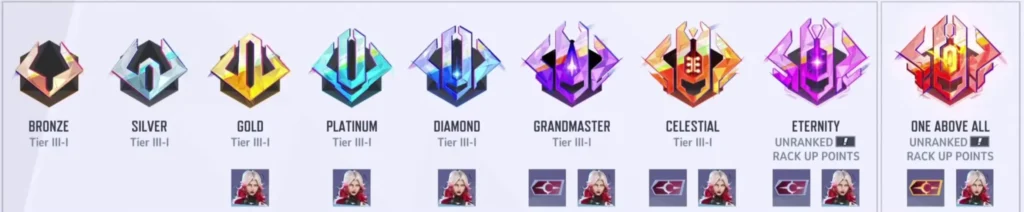
Marvel rivals ranked rewards are tied to your season progress, and they’re usually granted based on the highest rank achieved during that season, not necessarily where you finish after a late slump. That detail matters if you’re worried about dropping after you hit a milestone. For more competitive guides, visit https://eloboss.net.
What you can expect from rewards:
- An exclusive rewards track that often includes a seasonal skin for reaching Gold or higher.
- Crests of Honor at higher thresholds, such as grandmaster crest, celestial crest, and the top-end one above all crest.
- Some seasons also add frames or nameplate cosmetics starting around Platinum.
Common Milestone Targets Players Chase
If you’re setting goals, these are the “named” checkpoints people talk about most:
- reach gold for the seasonal skin tier in many seasons
- reach platinum iii for a higher reward tier in some reward tables
- reach diamond iii to unlock the higher-elo ruleset and push toward crest milestones
- reach grandmaster iii and reach celestial iii for the bigger Crests of Honor
- reach eternity if you want the Eternity and One tier rewards and to chase the top two ranks
When the season ends, rewards are distributed afterward. Keep an eye on the in-game season page so you know the exact date for your region, especially around a new season rollover like season 4.