
Randomness has a huge part to play in tabletop games. It helps to create outcomes that aren’t predictable, and it also helps to make games more interesting. Randomness also has a part to play in titles that are entirely focused on narrative direction, because even though there is a path to follow, randomness helps to spice things up along he way, which helps to make the experience more fluid.
Randomness is a Way to Reflect Accurate Simulations
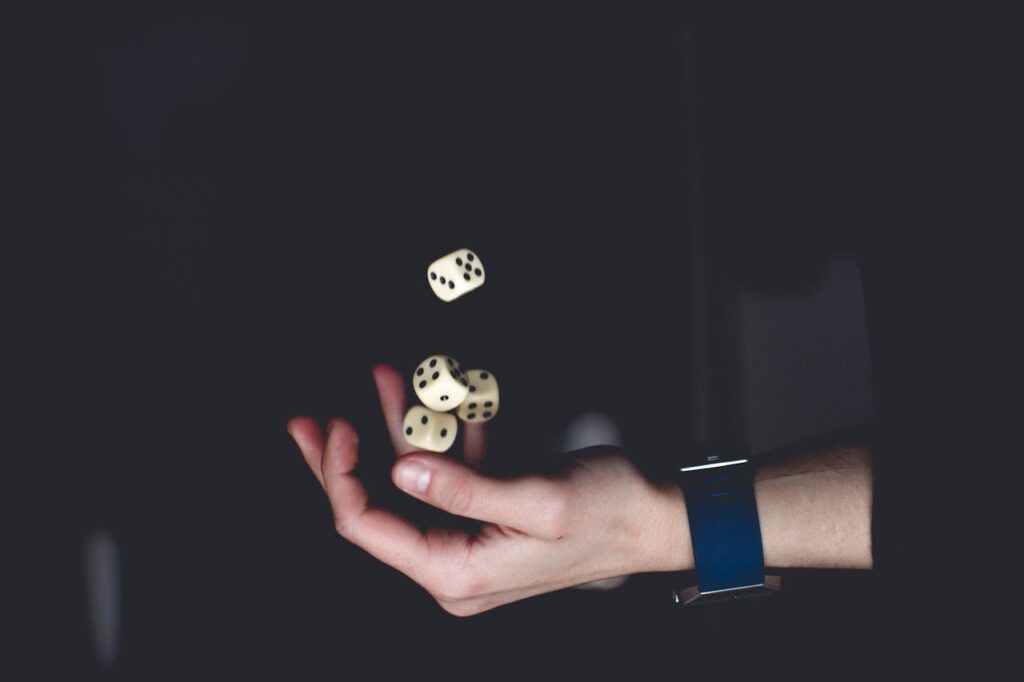
One way that modern tabletop games use randomness is to reflect life events. Real-life simulations are influenced by environmental factors, like timing, human error, and even chance. Representing every variable in a game would make systems unbelievably complex and almost impossible to play. By using random outcomes, like by using dice, it becomes possible to balance positive and negative outcomes without having to account for every possible outcome and influence. Skill checks are a prime example here.
A party’s ability, or character strengths, may influence the outcome, as well. Being able to re-roll a die or being able to ignore a result, still means the original outcome is random. If online virtual dice are used, the outcome can be made even more random, as dice like this can go beyond the numbers on a traditional dice. It’s not just the tabletop world that uses randomness, either. In fact, digital card games like solitaire use randomness when shuffling and dealing. Online experiences allow players to join matches instantly, with randomness creating a game within seconds.
Games like chess also use randomness to dictate the move of the CPU. This is usually run alongside a difficulty algorithm, which dictates the percentage chance of the computer making a bad move versus a good one.
In iGaming, randomness determines the outcome of a slot machine or the bingo balls pulled from a virtual cage. This randomness is implemented across platform features, like free spins bingo promotions, as well as traditional games, which add a new level of interest to the game.
If someone does manage to complete a bingo grid, a cash prize can then be awarded, with the promotion being fair as a result of the random number generator used to power the game on a foundational level. The same concept can be related back to tabletop games, in the fact that if a die roll is successful, a high-reward loot chest can be issued. As the outcome is random, the chance of it triggering can be roughly predicted using percentages, but not as a firm guarantee.
Randomness is the Backbone of Modern Tabletop Games
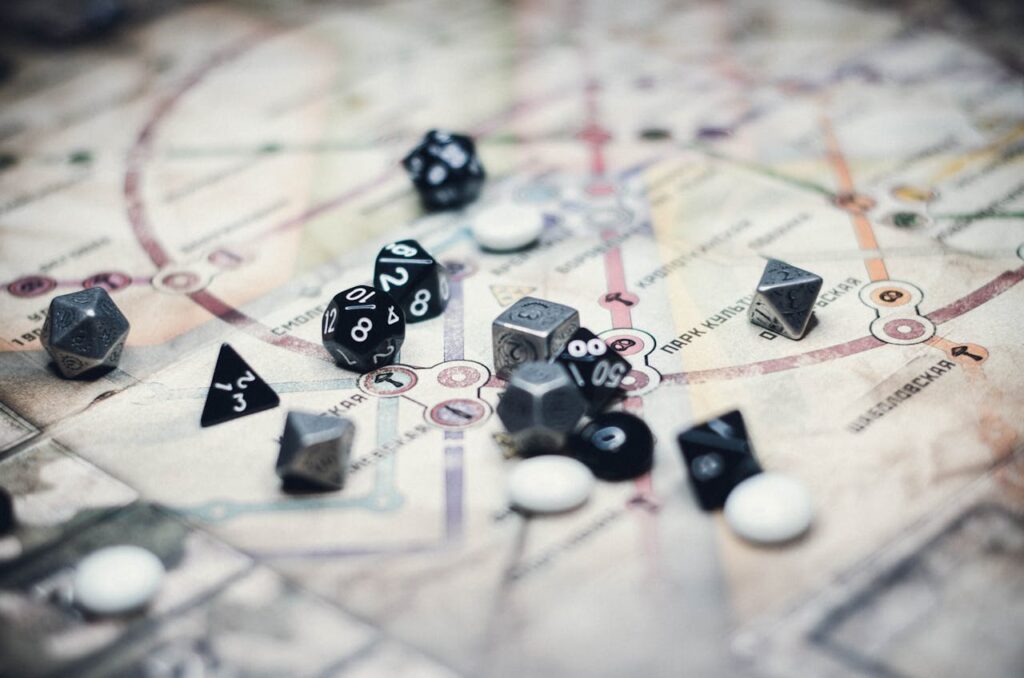
Even though it’s possible for randomness to clash with storytelling, it’s still essential to the gaming genre. This is especially the case with games that have some degree of chance mechanics. Digital platforms have expanded the concept of randomness significantly, as games can implement randomness on a larger scale.
Instead of being limited to a six- or 20-sided dice, random number generators can generate thousands of combinations, which not only makes games more replayable but also helps to add even more interest and excitement. Features like this show technology is advancing more by the year, and the digital world is continuing to enhance playing experiences.