
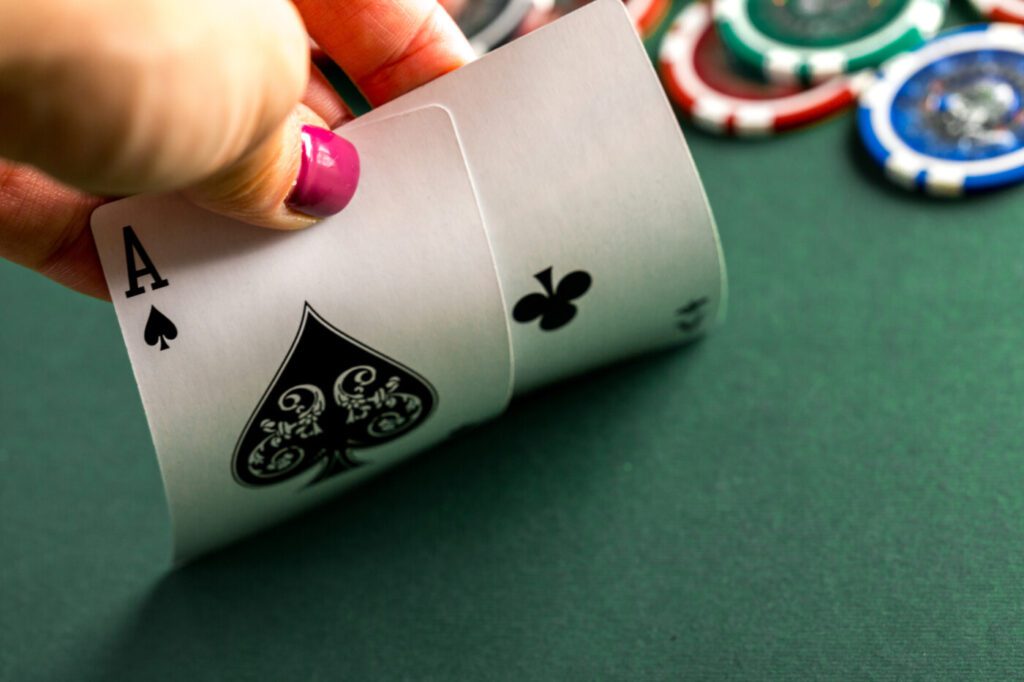
Cards and chips for poker on green table
A good bluff is rarely random. It works when every part of the hand points in the same direction. The bet size fits the story, the earlier actions support it, and the timing does not break the picture. That is why strong bluffing looks calm from the outside and is carefully built from the inside.
How the story starts
Bluffing begins long before the river card. A player builds an image across several hands, then uses it when a weak holding needs support. People who study poker seriously often watch other competitive environments too, including betting online, because the same habit shows up there – reading structure before making a move.
That habit has a business use as well. In a meeting, a weak position does not always need louder words. It needs a consistent line, clean numbers, and a tone that does not wobble halfway through the pitch.
Bet size says more than words
A bluff fails when the sizing makes no sense. A tiny river bet after strong action often looks nervous. An oversized shove on a board that does not support it can look forced. Good players think about what value hands would do, then keep their bluff in that same lane.
This carries straight into negotiation. If someone asks for a major concession too early, people feel the mismatch. If the ask matches the context, it lands better, even from a weaker seat at the table.
Reading people without staring at them
Live poker made body language famous, but most useful reads are small. A hand that reaches for chips too fast, a voice that speeds up, a pause that appears only when pressure rises – these details matter because they break rhythm. In work settings, the same clues show up during pricing talks, interviews, and contract calls.
The clearest signs usually look like this:
- A sudden change in speaking speed.
- Answers that become shorter after one direct question.
- Strong eye contact that appears only at key moments.
- Repeated checking of notes before a commitment.
None of these signs proves anything by itself. Taken together, they can show stress, hesitation, or over-preparation. Good readers do not jump after one clue. They wait for a pattern.
Online poker changed the bluff
Digital poker removed the stare-down, but it did not remove the tell. The read moved into timing, button speed, and betting sequences across many hands. Players now study delay patterns, repeat sizes, and spots where opponents stop following balanced lines. Some even test mobile tools, including melbet download apk, because screen flow and action speed change how decisions are made under pressure.
That shift connects naturally with game theory. A bluff is not judged by one pot. It is judged by whether the decision makes sense against a range and stays profitable over time.
What this teaches outside poker
The best lesson is simple enough to use right away. Confidence works better when it is supported by sequence, tone, and proportion. People trust a position more when each piece agrees with the next one.
That is why bluffing has value beyond cards. It trains risk judgment, emotional control, and message discipline. Those are useful skills at a poker table, in a salary talk, and in any room where people must act before they hold all the facts.