
Every group that has run a campaign for more than a year has hit the same Tuesday. Two players cancel at six, the session cannot go ahead with three, and the three who showed up sit around a table full of dice with nothing to roll them for. Most groups reach for a card game. A few dig out the chess set that came with the flat. Those groups keep digging it out, and the reason is not nostalgia. Chess rewards the habits a decade at the table has already drilled in.
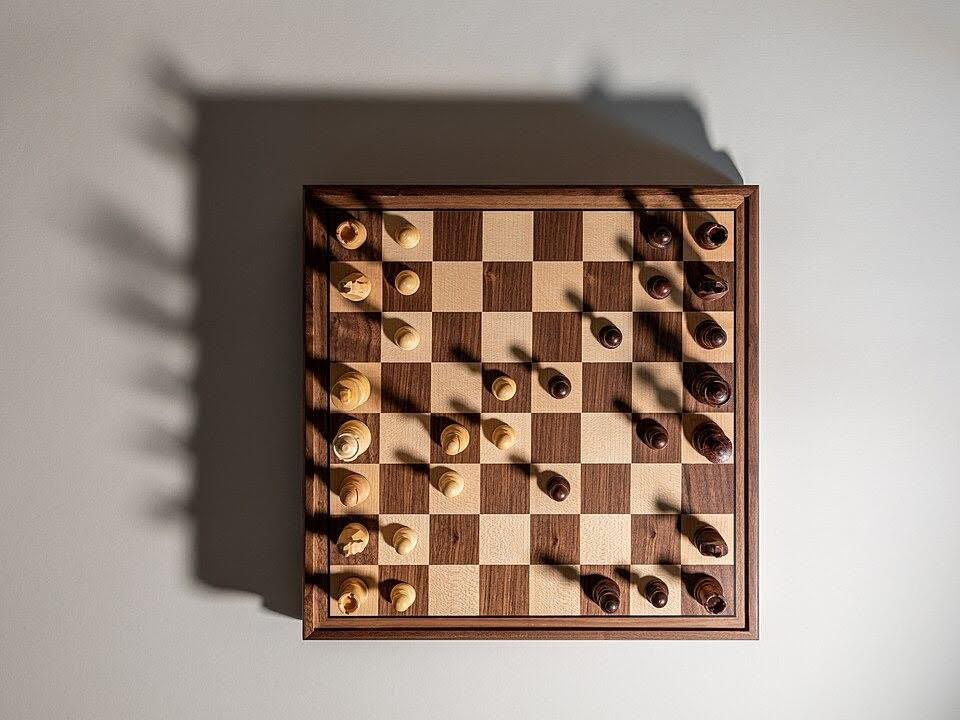
The skills transfer more than people expect
A player who has run a fighter through six levels of combat already thinks in terms of action economy and positioning, and in terms of who can reach whom this turn. Those are chess concepts with different names. The table below is the translation.
| Tabletop habit | Chess equivalent | Where it shows up |
| Action economy: two attacks beat one | Tempo: a move that makes two threats beats one that makes one | Forks, discovered attacks |
| Positioning: flank the enemy, hold the choke point | Piece activity and the centre: pieces on central squares control more | Opening play, knights on e5 and d5 |
| Threat range: who can reach whom this turn | Attacked squares: what each piece covers right now | Every capture, every check |
| Reading the DM: what is the encounter designed to do | Reading the opponent’s plan: what is the last move for | Middlegame planning |
| Resource management: spell slots and hit points | Material count, the piece values every beginner learns in week one | Whether a trade is worth taking |
| Initiative order | Who moves first and what that is worth | White’s first-move edge, gambits |
The one habit that does not transfer is the dice. There is no roll in chess, so a player who has spent years hedging against a bad roll has to learn that the position on the board is the whole truth. Tabletop players usually find this a relief within a week.
A first session for a group of three
Three people and one board works better than it sounds. Two play, the third watches with the job of naming every capture that was available and not taken, which is the fastest way to learn to see the board. Rotate after each game. A first evening that keeps a group of RPG players interested looks like this.
| Time | What happens | Why this order |
| 0 to 10 min | One person explains the moves, or a phone video does it | Nobody needs to be the expert |
| 10 to 30 min | Pawn game: pawns only, first to the far rank wins | Teaches pawn structure without the rest of the army |
| 30 to 60 min | Full games, ten minutes each side, third player calls out missed captures | Short clocks stop the analysis paralysis RPG players are prone to |
| 60 to 80 min | Each player picks one opening from the three below and plays it twice | Gives the next session a plan |
| 80 to 90 min | Run the best game through an analysis tool and read the explanation of the worst move | Ends on a lesson rather than a loss |
Three openings that suit tabletop players
Tabletop players want a system, not a vibe. Each opening below fits in one sentence and plays the same way whatever the opponent does, which is the closest chess gets to a character build.
| Opening | One-sentence plan | Who it suits |
| London System (White) | Pawn to d4, bishop to f4, then the same setup against almost anything | The min-maxer who runs the same build every campaign |
| Caro-Kann (Black) | c6 first, d5 next, then swap off White’s attackers one at a time | The one who always plays the cleric |
| Italian Game (White) | Pawns to e4, knight to f3, bishop to c4, aim at f7 | The player who wants a fight by move ten |
Each of these has a few hundred hours of free material behind it, and a player who commits to one for a month will beat the friend who changes opening every game.
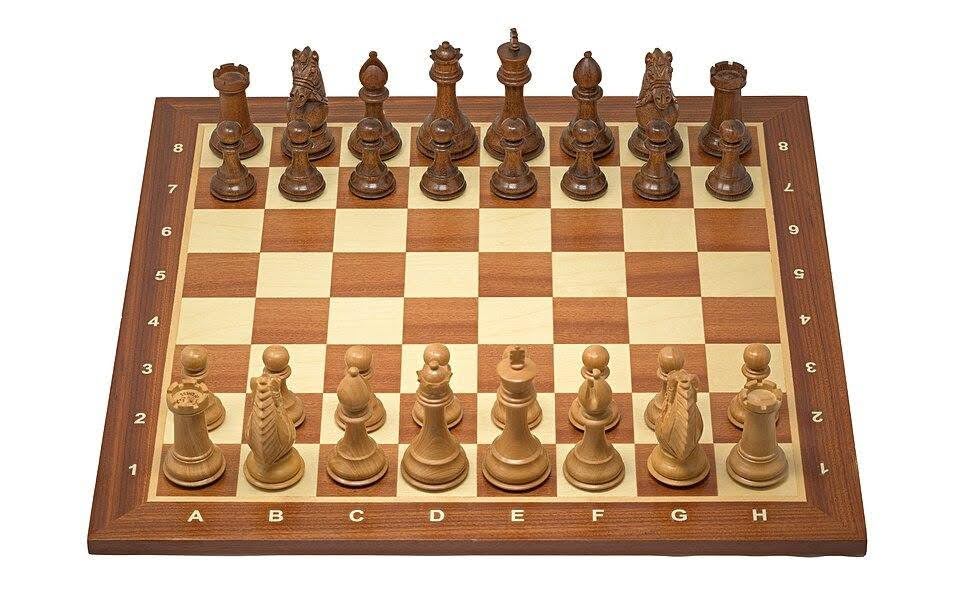
Getting better without a coach
The thing that stalls most adult beginners is not losing, it is losing without knowing why. An engine will say the move was bad and give a number. A tool such as ChessHelper.ai runs the engine analysis after the game and then explains each mistake in plain language, which for a tabletop player is the equivalent of a good DM explaining why the party wiped: not the dice, the decision. Three explained mistakes per game, written down as one line each, produce a faster rating climb than any amount of watching grandmaster videos.
Rating itself is worth mentioning, because RPG players tend to like a number that goes up. Online chess gives one immediately, and the climb from a fresh account to 1,200 usually takes a group of adults two to three months of casual play. It is the same loop as levelling a character, with the difference that nobody has to prep the session.
What the chess set brings back to the campaign
Groups that add chess to the cancelled-session rotation report a change in the campaign itself. Players who have learned to count tempo start counting actions in combat. Players who have learned to read a position start reading encounter maps. And the group has a second thing to do together that needs no prep, no DM and no schedule, which in a hobby built on five people finding the same free evening is the rarest resource of all.