
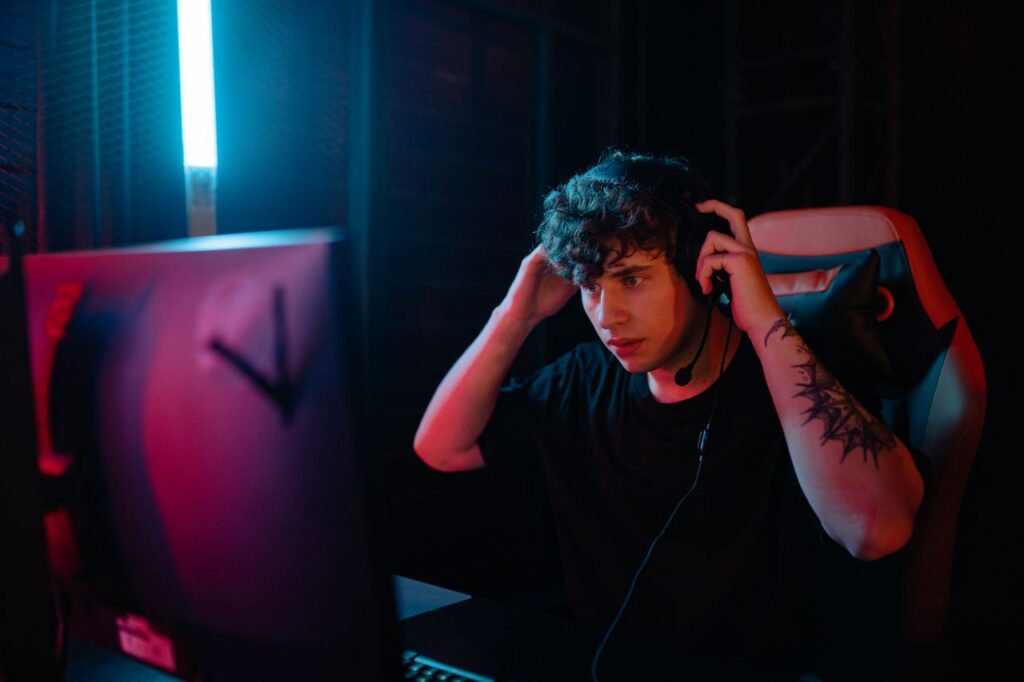
Competitive titles move fast. In games like Apex Legends or Valorant, a quarter of a second separates a clutch win from a wipeout. When players switch their webcams on, the entire mood changes. Video calls strip away the cold anonymity that turns normal players into frantic screamers. You stop playing alongside a faceless username. Instead, you are fighting beside an actual person who is leaning forward in their chair, biting their lip, and sharing the exact same tension.
Why Group Play Is Now the Norm
Multiplayer is not a side hobby anymore. The ESA’s 2025 report found that 55% of players play with others every week, and 72% have done it at least once. Among teens, Pew Research found that 89% play with other people, online or in person, while only 11% stick to solo play.
So teamwork is the main event, not a bonus feature. If most people play in groups, then how well the group talks decides how much fun everybody has. Simple as that.
Body Language Fills the Gaps
Voice carries words and tone. Video carries the rest. A teammate who is lost will often not say so out loud, but you can see it on their face, and you can slow the plan down before the round falls apart.
That matters because many players stay quiet when they don’t understand a strategy. Nobody wants to look slow in front of friends, especially in a group with a few veterans who have played the same game for years. A visible shrug gives you a polite way to step in and explain.
Clearer Callouts, Fewer Mix-Ups
“Go left” is a trap. Whose left? Yours, theirs, the map’s? On a video call, a player can point at the screen, trace a route with a finger, or share a clip of the exact spot. Confusion drops.
Screen sharing is the quiet hero here. You can pull up a map, a loadout or a build order, and everyone looks at the same thing at the same time. No more guessing, no more ten-second arguments about where the objective actually is.
Trust Gets Built Faster
People trust faces. It sounds obvious, yet in many online lobbies you team up with usernames and tiny icons only. When teammates see each other laugh, groan and celebrate, they bond quicker, and that bond shows up in the game.
Finding New Teammates With Less Awkwardness
Not everyone has a ready-made squad. Maybe your friends live in another time zone, or they quit the game last month. Finding fresh teammates is part of the hobby, and it is often the hardest part. Some players meet people through live video chat first, then invite the ones they click with into a lobby. A quick OMG video call can show you in a minute whether someone is patient, friendly and fun to play with, which a username will never tell you.
Leaders Read the Room Better
Every good team has a shot-caller. On video, that person can see who is tired, who is tilted and who is fully locked in. Then they adjust. Maybe a short break. Maybe a role swap.
Without faces, those signals are easy to miss, and one frustrated player can drag everyone down before anyone notices what is happening.
Less Toxicity, More Respect
Researchers have long talked about the online disinhibition effect: people say things behind a screen name that they would never say to someone’s face. Video shrinks that gap. It is much harder to insult a teammate when you can see how they react.
It won’t fix everything. Some people will be rude anywhere. But a visible, human presence nudges most players toward better behavior, and that makes long sessions a lot more pleasant.
Friends Across Distance Stay Close
Games often become the main way far-away friends hang out. The ESA reports that 70% of Gen Z and 61% of Millennials have met people through video games whom they would not have met otherwise. Many of those friendships live on different continents.
Add video, and a weekly raid night turns into something closer to a real catch-up. You hear the news, see the new haircut, share a laugh, then go and take down the boss together.
Simple Setup Tips
You don’t need fancy gear. Put the camera at eye level, use headphones so the call doesn’t echo, and mute yourself when you’re not speaking. A second device, like a phone or a laptop, keeps the video from eating into your game’s performance.
Limits Worth Remembering
Video uses bandwidth. On a weak connection it can cause lag, and lag ruins matches faster than any bad teammate. Test your setup first, and drop the video if the game starts to stutter.
Final Thoughts
Video calls won’t win games for you. What they do is make the people in your game easier to understand, easier to trust and easier to learn from.
Try it at your next squad night. Start small, keep it relaxed, and see what changes. Chances are, a team that talks like friends will start playing like one.