
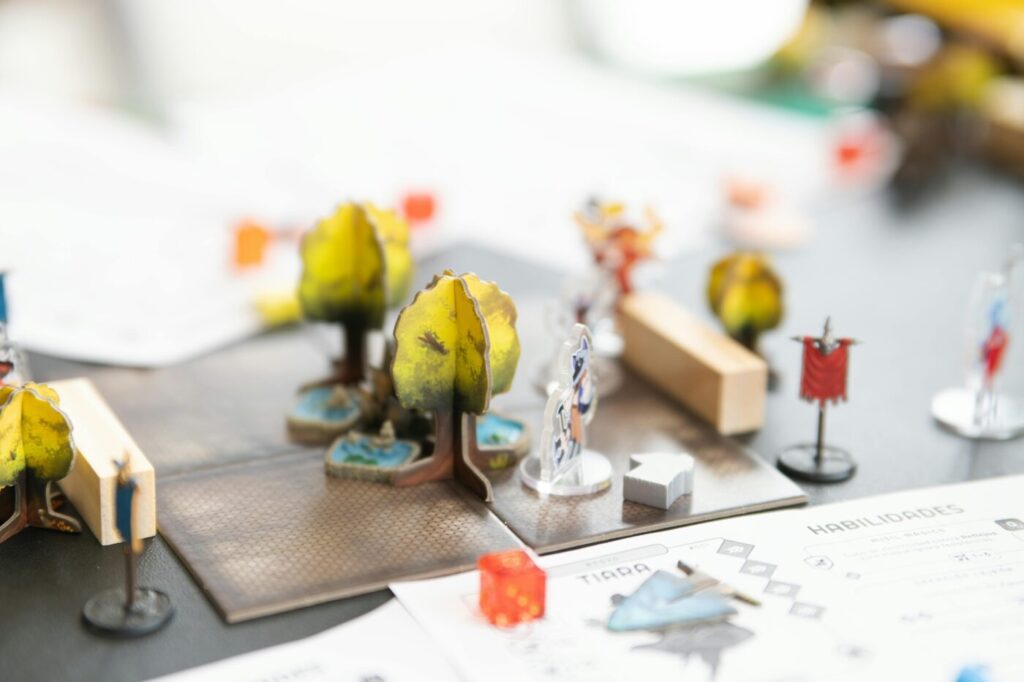
I’ve been there. You’re sitting around the table with your friends, dice in hand, and suddenly you realize you have absolutely no idea what you’re doing. Your character sheet might as well be written in ancient Elvish, and everyone else seems to know exactly what they’re doing while you’re just… there.
Don’t worry. We’ve all been that person.
Tabletop RPGs are amazing — there’s nothing quite like the mix of storytelling, friendship, and pure chaos that happens when you get a group together. But here’s the thing: a little strategy goes a long way. You don’t need to be a rules lawyer or memorize every spell in the book. You just need to understand a few key things that’ll make your sessions way more fun.
Tip 1: Figure Out What Your Character Actually Does
This sounds obvious, but you’d be surprised how many people create a character and then have no clue what they’re supposed to be doing. Are you the tank? The healer? The one who talks to NPCs? The sneaky person who picks locks?
If you’re playing a fighter, your job isn’t just to hit things with a sword (though that’s fun too). You’re the person who stands between the squishy wizard and the angry dragon. You absorb damage so your teammates don’t have to.
Playing a rogue? You’re not just there to steal things. You scout ahead, disable traps, and deal massive damage when enemies aren’t expecting it. But you also need to stay alive, which means knowing when to hide behind the fighter.
The key is understanding your strengths AND your weaknesses. That wizard who can fireball an entire room is also probably going down in one hit if something gets too close. Work with that, not against it.
Tip 2: Talk to Your Team (Seriously, Just Talk)
I can’t tell you how many TPKs I’ve seen happen because nobody communicated. Someone charges in without telling anyone. The healer runs out of spell slots and doesn’t mention it. The rogue finds a trap but forgets to warn the party.
Good communication isn’t just about tactics, though that’s important. It’s about sharing information, planning together, and actually listening to what others are saying.
Learning how to play poker actually taught me a lot about reading people and understanding strategy that applies perfectly to RPGs. Both games require you to pay attention to what others are doing, communicate effectively, and think strategically about your next move.
Before you do something big — like cast that fireball spell or kick down a door — just say something. “Hey, I’m thinking about doing X. What do you think?” It takes two seconds and can save your entire party.
Tip 3: Roll with the Punches
Your DM is going to mess with you. That’s their job. They’re going to throw curveballs, change things up, and probably kill your favorite NPC at some point. (Sorry, it’s going to happen.)
The best players I know don’t try to predict everything. They adapt. When the diplomatic approach fails and combat starts, they switch gears. When the combat encounter turns into a chase scene, they embrace it.
I remember one session where we spent twenty minutes planning this elaborate heist, only to have our rogue roll a natural 1 on the first stealth check. Everything went sideways immediately. But instead of getting frustrated, we improvised. Suddenly, it became this chaotic action sequence that was way more fun than our original plan.
Don’t get too attached to your strategies. Be ready to throw them out the window and try something completely different. Sometimes the best solutions come from the weirdest ideas.
Tip 4: Remember It’s About the Story
Here’s where some players get it wrong — they focus so much on optimizing their build or maximizing damage that they forget why we’re all here. We’re here to tell a story together.
Your character isn’t just a collection of stats and abilities. They’re a person (or elf, or dwarf, or whatever) with motivations, fears, and relationships. What do they want? What are they afraid of? How do they feel about the other party members?
Some of my favorite RPG moments had nothing to do with combat or dice rolls. They were quiet conversations between characters, moral dilemmas that made us think, or moments where someone’s backstory suddenly became relevant to the main plot.
Don’t ignore the mechanical stuff — it matters. But don’t let it overshadow the human elements that make these games special.
The Bottom Line
You don’t need to be perfect at this. Nobody is. Even experienced players mess up, make bad calls, and sometimes accidentally fireball their own party members. (We don’t talk about that incident.)
The point is to have fun, tell interesting stories, and spend time with people you enjoy. These tips will help you do that more effectively, but they’re not rules carved in stone. Every table is different, every group has its own dynamic, and every campaign has its own flavor.
So grab your dice, embrace the chaos, and remember that the best adventures are the ones where something goes completely wrong and somehow works out anyway. That’s where the real magic happens.