
Dead Space on a shoestring budget — that’s the easiest way to describe the new game from the Polish studio at first glance. The developers have clearly borrowed many mechanics from the cult franchise and other notable works such as Resident Evil. Moreover, the gameplay is far from perfect — the project’s modest budget should be taken into account.
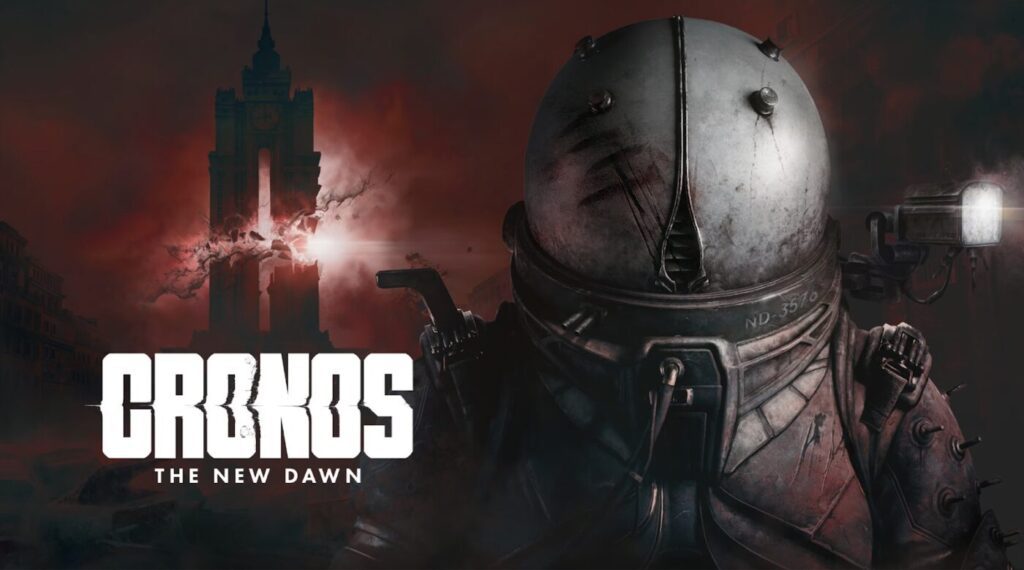
However, Cronos: The New Dawn is more than just ‘Dead Space at home.’ The creators not only attempted to transfer familiar mechanics from classic survival horror games, but also tried to enrich the game with successful solutions from their previous works. The New Dawn features a dark Eastern European aesthetic and time-travel elements, similar to The Medium. The plot explores themes reminiscent of Observer and skillfully builds intrigue. The team’s vast experience with sound design in the Silent Hill 2 remake has not gone to waste either. All in all, despite imitating past masterpieces and borrowing from itself, the game turns out to be quite decent. In some ways, playing Cronos is like discovering hidden rewards in other experiences: just as exploring every nook and cranny in the game can yield valuable cores or secrets, players in the online world can hunt for perks using Hiddenjack no deposit unlocking credits or free spins without any initial commitment — turning careful exploration into a satisfying payoff.
Exploring Dead Krakow
Bloober Team invites us to explore the fictional town of Nova Zarya, which references the real-life district of Nowa Huta in Krakow, the developers’ hometown. The settlement was built by Soviet authorities shortly after World War II. An agent of the Union corporation, known as Traveller ND-3576, wakes up among the ruins of a city deserted after an unknown catastrophe. The girl in a heavy metal suit is tasked with finding fault lines that will allow her to return to 1980 and save selected individuals by transferring their consciousness into the future.
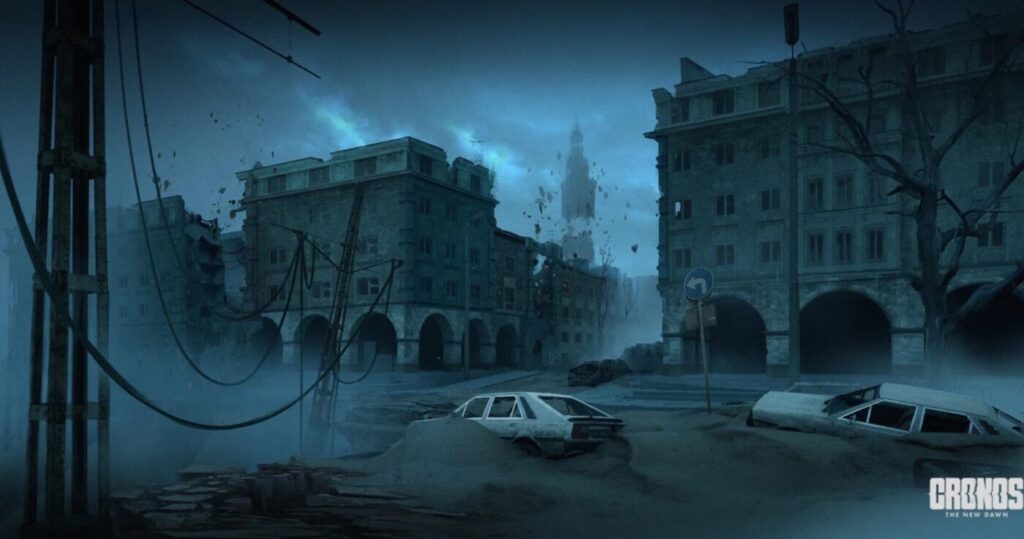
The motives of the ‘Union’ are not entirely clear, and the Traveller is hidden from the player behind her suit. The corporation is gathering information to investigate the causes of the catastrophe, but the agent does not know why specific people are needed. In fact, the Traveller does not fully understand who she is, remembering only the mission to extract the entities. By communicating with the targets and temporarily transferring their consciousness into her body, ND-3576 tries to uncover what happened and also understand her own past. In addition, she must overcome the resistance of the orphans — infected people capable of merging with each other.
The exposition in the game is vague but intriguing. At first, very little information is given, but by the end, the story unfolds with several twists and even moral dilemmas. After the finale, there is food for thought not only about the causes of the disaster, but also about the work’s underlying message. It is no coincidence that the game’s main slogan is: ‘Don’t let them merge!’ So, is it just about monsters merging in locations, or also about digital entities merging in the corporation’s database? Perhaps there is a political subtext too, since the action takes place in communist Poland in the 1980s.
Not everyone will appreciate that a significant portion of the narrative is presented through notes and audio journals, although many of them are well executed and enhance the atmosphere. It’s especially effective when a series of notes tells a complete story, often dark and tragic. Sometimes, as in The Last of Us, you realise what awaits in the next room (the most tense episode involves the sculptor and his masterpiece). However, there are too many notes in the game, and the topics are often repetitive. Yes, we already understand that the city is under quarantine — it’s unnecessary to mention it for the tenth time.
There are, however, more interesting narrative ideas. For example, in one episode set in the past, you can eavesdrop on residents’ conversations through a closed door, à la Observer. Additionally, the presentation of information is diversified by the fragmented lines of transferred consciousnesses. Of course, there are cutscenes too, but they are relatively few, and the staging and abrupt transitions from gameplay to video (sometimes perceived as jump scares) are not entirely smooth. The animations and facial expressions of characters also leave much to be desired.
Aside from the main characters, who are reasonably well developed, there are very few others. Most of the time, you will be communicating with… let’s call him an ally, so as not to reveal details. Dialogues with him are informative but painfully drawn out: the speech is slow, the voice monotonous, and the camera static. Despite these presentation issues, the story remains very engaging, with a strong central intrigue and a compelling setting.
Combat and survival mechanics
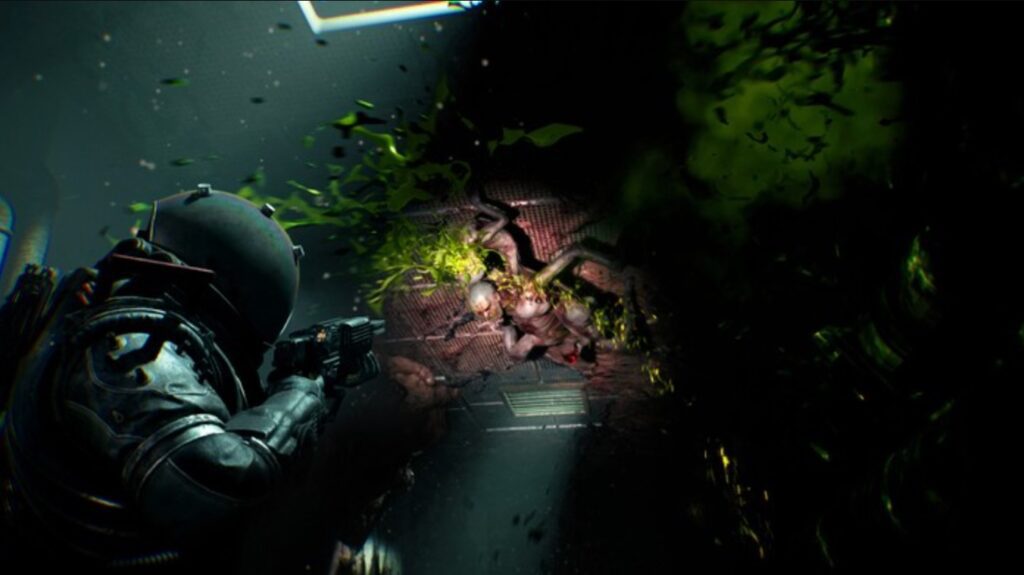
In a survival horror game, you can’t do without a decent combat system. In Cronos: The New Dawn, it is almost entirely copied from Dead Space, with minor exceptions. The Wanderer has several weapons at their disposal: a pistol, a couple of variations of shotguns and carbines, and closer to the end, something akin to a BFG. To deal more damage, you need to hold down the button and build up a charge, which adds a lot of suspense. Unfortunately, you can’t shoot off limbs — you can knock monsters down with a precise hit, but that’s about it.
There is no dodge button in the game, and the only way to escape is to run away or control the crowd. The latter is especially important, as orphans can merge with already killed enemies. If you don’t prevent a merger, the monster becomes stronger and gains armour that you must first break through. You can also act pre-emptively and burn suspicious frozen bodies with special shells before a battle begins. Later, you are given a special detector that glows green when aimed at a living organism.
As is customary for the genre, you can use red barrels and generators to neutralise enemies. Additionally, there are projectiles that explode when enemies approach. Traps also target the protagonist. For example, enemies embedded in walls suddenly grab the Wanderer when she enters their field of vision. Classic acid-exploding crawling parasites also appear.
Apart from trap enemies, there aren’t many other opponents — just several types of upright infected, differing mainly in damage indicators. The only ones that stand out are the centipedes, which move nimbly on any surface, including ceilings. There are enough bosses, but only two are truly original — the rest can be kept at a distance by shooting their weak points.
The above description may not sound very exciting. However, these simple and unoriginal mechanics work… fine. The gameplay is made more intense by its relatively high difficulty, which cannot be adjusted. Completing the game without collecting resources is impossible: enemies hit hard, ammunition runs out quickly, and checkpoints and save rooms are rare.
In general, the main enemy here is the inventory, which is criminally small at the start. You’ll constantly have to decide what to take with you, what to upgrade (armour or the number of slots?), and so on.
To find useful items, you must solve simple puzzles involving codes and keys, in the style of Resident Evil. Only one puzzle approaches the complexity of those in Silent Hill 2. Several times, you’ll connect electrical circuits, and midway through the game, the Traveller acquires gravity boots, allowing movement between special platforms, literally turning the world upside down. The challenge in these sections is debatable (except for one episode), but they look impressive. The cutest tasks involve finding cats — when you hear a meow, follow the sound and reach the pet by solving the puzzles described above. Typically, saving these creatures rewards you with cores, which are necessary for upgrading your suit.
The only mechanic that truly stands out from other survival horror games is consciousness transfer. By placing someone’s digital personality into the protagonist’s body, you gain a passive bonus. But the most intriguing aspect is how the mechanic works. The so-called phylactery can store no more than three consciousnesses at a time, meaning you’ll eventually have to decide who to keep and who to erase forever. The bloodcurdling screams and pleas for mercy accompanying the removal of an entity are just as terrifying as any other jump scare.
There’s another rare and creepy feature: in some episodes, the game abruptly throws the Wanderer into the subconscious of other people and then returns her to reality, often multiple times in succession. At some point, you begin to doubt whether the enemies in front of you are real, grab your gun, and shoot just in case.
The magic of Khrushchev-era buildings
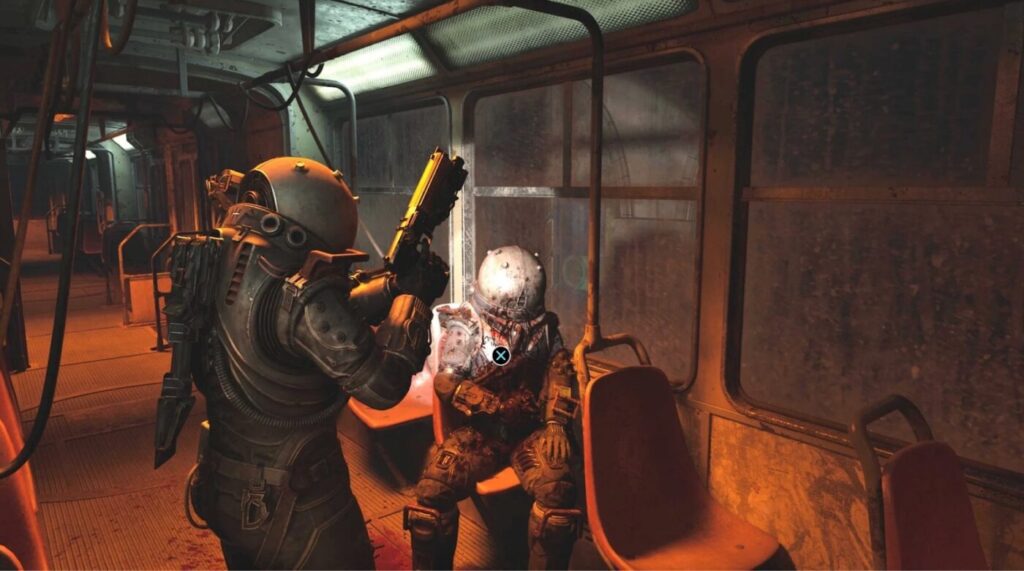
Cronos: The New Dawn cannot be called very scary — it is more tense. The developers rarely rely on cheap tricks, instead creating an oppressive atmosphere. At first glance, the locations may seem monotonous: a factory, a panel building, a hospital, a metro station, and so on. However, the detailed interiors (from residents’ belongings to drawings on the walls) and expressive lighting work wonders. As a result, the cramped spaces of Khrushchev-era buildings, the eerie crypt, and even the seemingly mundane factory all leave a lasting impression. Not to mention the open locations with Soviet monuments and familiar cars: you’ll see a colourful sandstorm and a winter courtyard reminiscent of the films of Eldar Ryazanov and Krzysztof Kieslowski. Alas, even high-end PCs sometimes struggle when demonstrating local graphics — Unreal Engine 5, after all.
The sound design in the game is exceptional. There is minimal artificiality in the sounds, which is crucial for horror. Everything is crystal clear and naturally recreated: from the wheezing of orphans and the creaking of doors to the crunch of snow and the jingle of levitating objects against the heroine’s spacesuit. The transitions are impressive — for example, closing a text note sometimes triggers strange sounds that vividly restore immersion. The tracks also change at just the right moments, setting the mood perfectly. Composer Arkadiusz Reykowski seems inspired simultaneously by Tangerine Dream and Lustmord: space synth transitions masterfully into dark ambient and back. In particularly dramatic moments, epic compositions with a female choir are included.
As you overcome challenges and immerse yourself in the atmosphere, you gradually stop noticing the negatives, such as the weak interactivity of the environment. There are also few strong staged moments in Bloober Team’s horror game: you will spend a significant amount of time wandering locations reminiscent of the first Resident Evil games, collecting resources, reading notes, and peering into dark corridors in search of enemies. Some players may find The New Dawn stifling due to its complexity and resource management. However, if you play thoughtfully, you gradually accept the rules of the game and dissolve into its eerie but captivating setting, trying to uncover the intriguing plot.
Combining their best work and all their experience in the survival horror genre, the Polish developers have managed to create a game that is both derivative and remarkable. The gameplay in Cronos: The New Dawn may not surpass Dead Space. Resident Evil offers stronger staging, and for mysteries, Silent Hill remains superior. However, Bloober Team’s game stands out with its unique setting, dense atmosphere, compelling plot, engaging exploration, and satisfying challenge.
Brief summary
Pros: attractive setting of Soviet Poland; intriguing plot; simple but effective gameplay; exploration of locations in the spirit of Resident Evil; high but fair difficulty encouraging exploration; nice graphics; excellent soundtrack authentic to sci-fi and horror; original consciousness transfer mechanics; cats.
Cons: poor PC optimisation; annoying resource management; weak cutscenes; no dismemberment; towards the end, repetitive tasks and backtracking can make the game tedious.