
Dungeons & Dragons has changed how games are constructed in a very subtle way. Systems such as turn-based combat, stat-based characters and dice-based results have spread well beyond fantasy RPGs. They’re baked into card decks and hidden in video game engines now.
These mechanics don’t require dragons and dungeon maps to work. They just need structure, risk and a way to push outcomes beyond player control. What began around a table top is now present in places with nothing to do with role-play on the surface.
Inspired Casino Games: Dice, Slots, and Theme
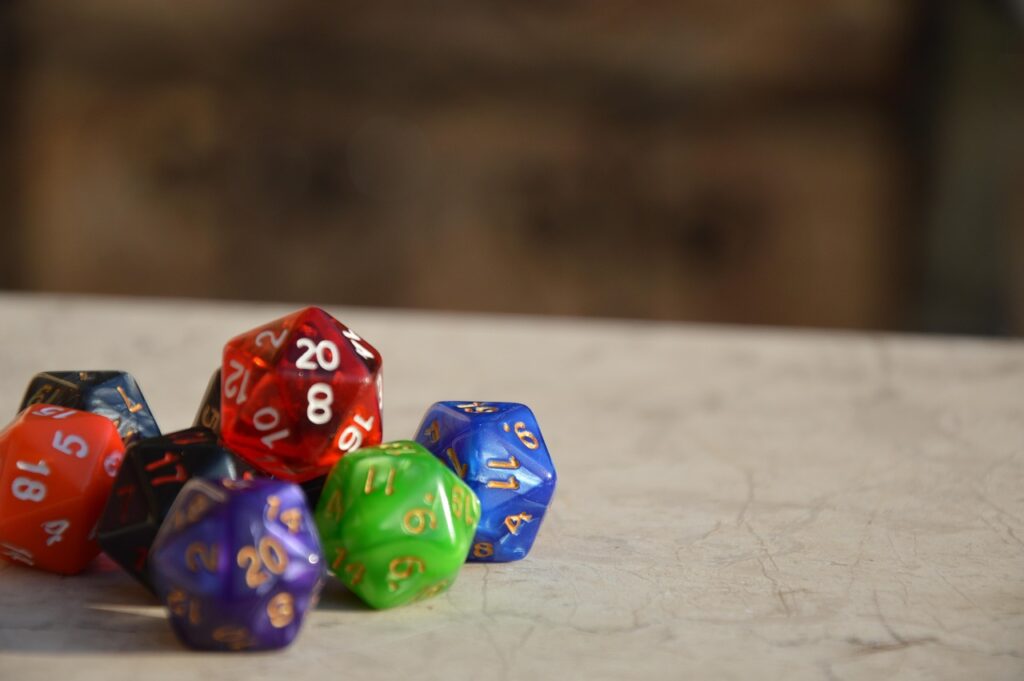
Some online slots are obviously influenced by D&D themes even if they do not use direct branding. Games from big-name developers have used fantasy creatures, dungeon backgrounds, spellbook images and even dice icons as integral components of the game. For example, there have been licensed slot titles that have d20 symbols used as scatter icons that would trigger bonuses just as a critical success might do in a campaign.
While not every platform offers these, some online casino options include a much wider set of thematic games. On certain platforms where players don’t need full ID checks, such as an online casino without KYC, there are crypto slots that make use of medieval fantasy styles, magic spells, and turn-based features that look and feel similar to role-play mechanics.
Some of these slots even introduce layered battles or unlock paths that mirror dungeon progression. Though they’re not official D&D products, they carry familiar features for those who know the game.
Board and Card Games Borrowing Role-Play Layers
Some modern text games are very similar to a D&D game, just without a human Dungeon Master. In Friends & Fables, for instance, players assume the role of characters and make decisions in a world that is run by AI. The system explains what happens, and responds to your decisions, and advances the story, just as a Dungeon Master would in a real campaign.
Yet, the rules have something that feels familiar about them, and that’s because they’re still done in the D&D style. Your choices may succeed or fail depending upon your character’s stats. Dialogue with characters can open up new avenues or cause trouble.
Even though there are no physical dice in the game, the game still utilizes the same logic as D&D to determine what happens. It’s an electronic version of the same thing, but told through words and replies instead of a play tabletop.
Text Adventures and AI Role-Playing
Some modern text games work a lot like a D&D session, just without a human Dungeon Master. In Friends & Fables, for example, players take on characters and make decisions in a world run by AI. The system describes what happens, reacts to your choices, and moves the story forward, similar to how a Dungeon Master would in a real campaign.
What makes it feel familiar is how the rules still follow a D&D style. Your choices can succeed or fail based on your character’s stats. Conversations with characters can open new paths or lead to problems.
Even though there are no physical dice, the game still uses the same logic as D&D to decide what happens. It’s a digital version of the same structure, just told through words and responses instead of a live tabletop setup.
Character Development Outside the Tabletop
Dice decision-making and character progression are two of D&D’s most identifiable features, and they’ve been directly copied by a number of games. In Baldur’s Gate 3, encounters and choices are heavily influenced by D&D 5th Edition rules, with many player actions being determined by the roll of a d20 behind the scenes.
The system does not simply take the dice and use them, it applies modifiers and context in the way that a Dungeon Master does. Older games such as Icewind Dale II also played directly off the D&D third edition rules.
Movement speed, ability checks, initiative rolls, and even armor stats work exactly the same as in the tabletop game. These are full adaptations of its mechanics, reworked for digital interaction without needing a physical table.