
A billboard or transit ad has to work under conditions almost no other marketing format deals with — glanced at from a moving car, viewed from across a street, competing with actual sunlight instead of a backlit screen. Designing for that environment is a genuinely different challenge than a social post, and testing concepts the traditional way, with full-size print proofs, is slow and expensive.An online AI image generator makes it possible to explore and refine outdoor advertising concepts at a fraction of that cost, visualizing how a design might actually read at scale before committing to print. Dreamina, built around the Seedream 5.0 Pro model, is well suited to this kind of high-impact, simplicity-focused visual work.
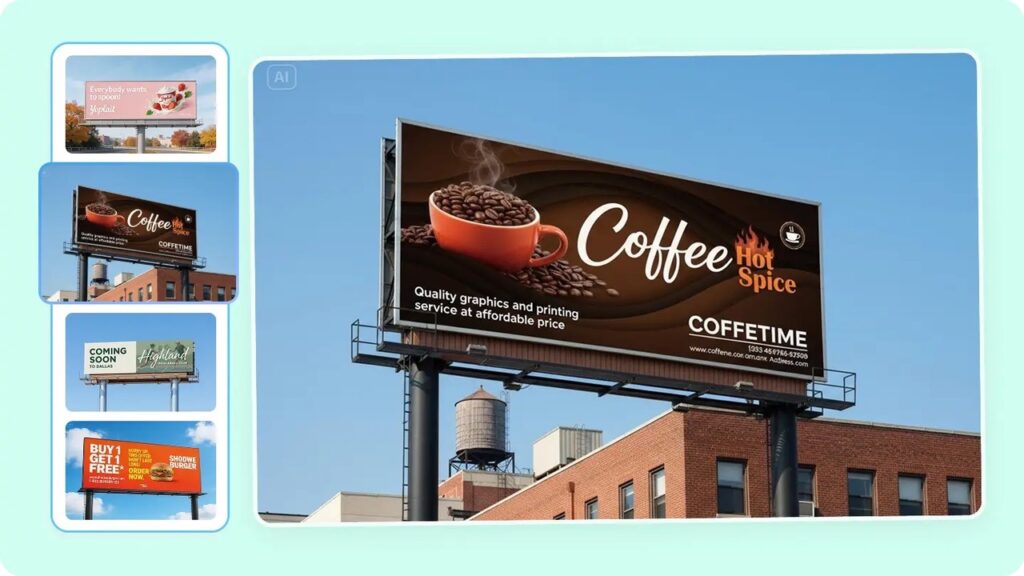
Outdoor advertising demands radical simplicity
Most marketing visuals have the luxury of a captive audience with a few seconds to look closer. Outdoor advertising gets a fraction of that — often just a second or two of someone’s attention as they pass by. That constraint means an outdoor concept has to communicate its core idea almost instantly, which rules out the layered detail that works fine in a social post or a print ad.
The principles that make an outdoor concept actually work
A handful of rules consistently separate effective outdoor advertising from forgettable concepts:
-
One single focal point, never a composition competing for attention
-
Minimal text — a few words at most, in large, high-contrast type
-
Bold, saturated color that reads clearly even in direct daylight
-
A logo placed clearly but not overwhelming the main visual
Designing for distance and speed
Unlike almost any other advertising format, outdoor concepts need to be tested at the actual viewing distance and speed they’ll be seen at. A design element that looks compelling on a laptop screen can disappear entirely from a car moving past at highway speed, so it’s worth imagining the ad shrunk down to the size it’ll actually appear as a thumbnail in someone’s field of view.
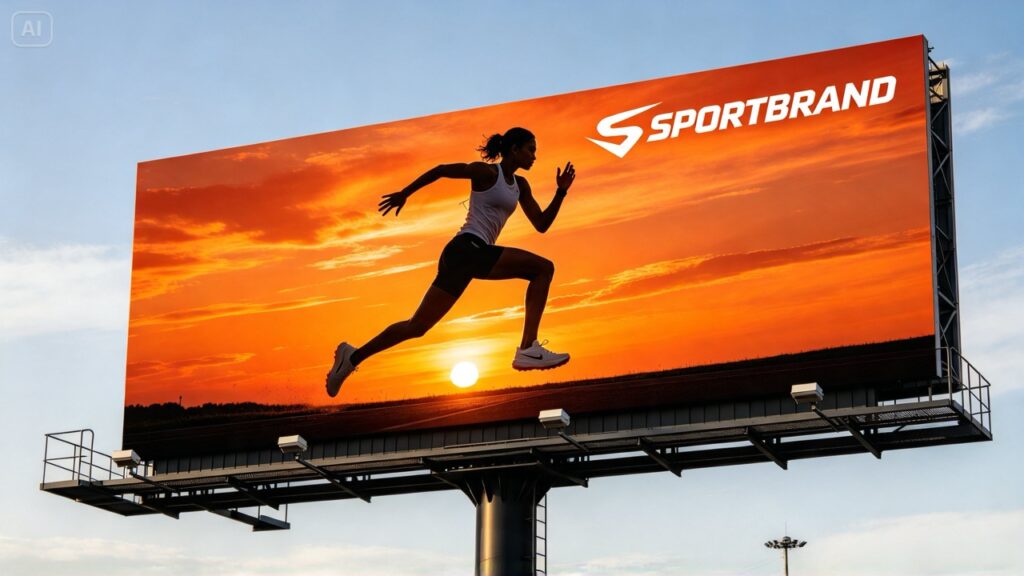
Adapting one concept across different outdoor formats
Outdoor advertising rarely means just one format. The same core concept often needs to stretch across several different physical placements:
- Large-format highway billboards
- Transit shelter or bus-side ads
- Building wraps or large urban installations
- Digital out-of-home screens in high-traffic areas
Accounting for real-world lighting conditions
Unlike a screen-based ad, an outdoor placement will be seen under direct sun, at dusk, and sometimes illuminated at night. Testing a concept’s contrast and readability under a few different simulated lighting conditions helps catch a design that only works under ideal, evenly lit circumstances.
Producing the outdoor concept with Dreamina
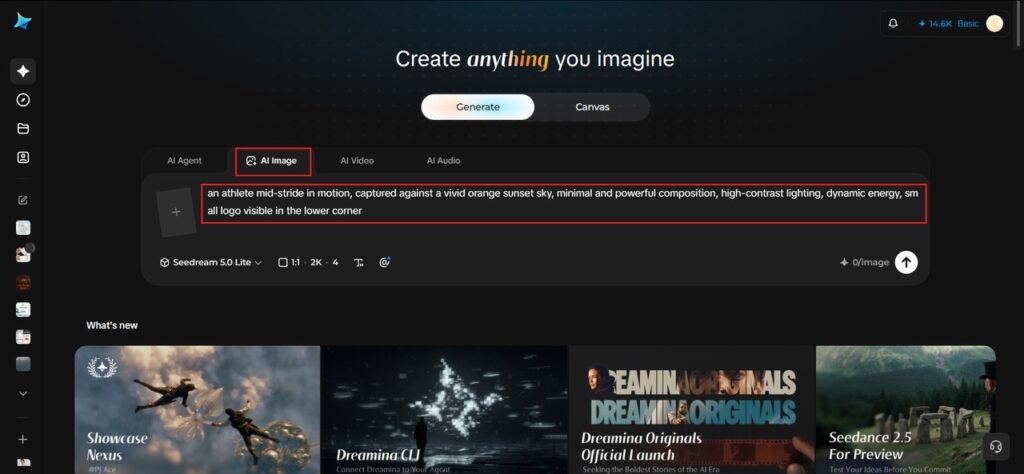
Step 1: Write a text description
Navigate to Dreamina and write a detailed text prompt describing your outdoor advertising concept, including the focal subject, color, and composition.
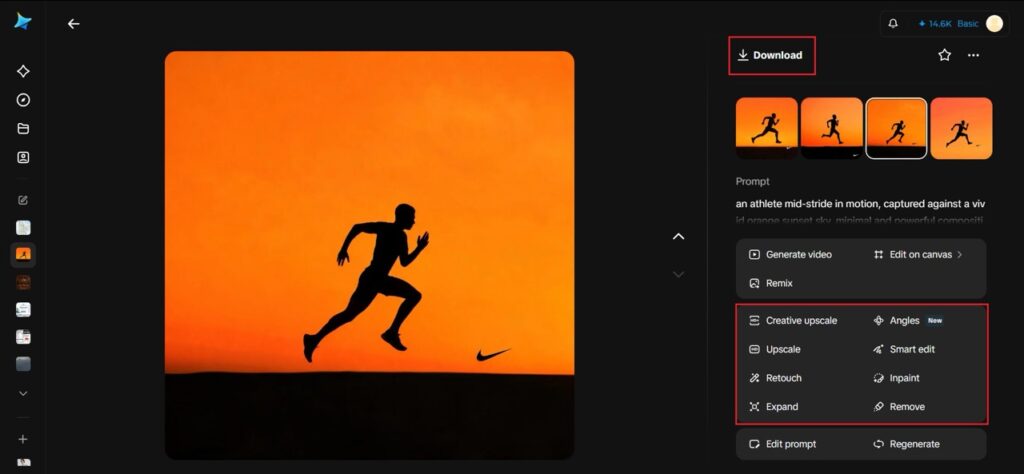
For a version featuring a person in the relevant field, try: an athlete mid-stride in motion, captured against a vivid orange sunset sky, minimal and powerful composition, high-contrast lighting, dynamic energy, small logo visible in the lower corner
You can also upload a rough sketch or reference photo as a reference image to guide the composition further.
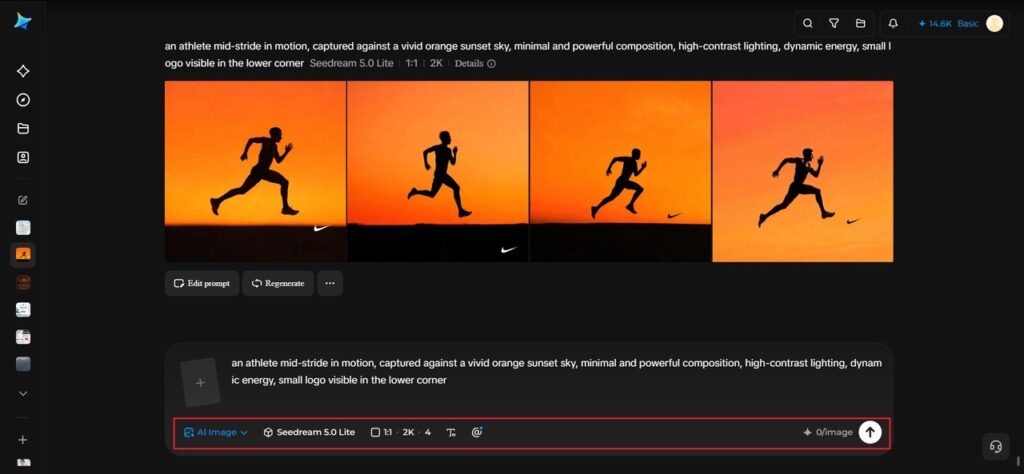
Step 2: Adjust parameters and generate
Set the model to Image 5.0 Pro by Seedream 5.0 Pro for bold, high-contrast rendering that suits outdoor formats well. Choose a wide landscape aspect ratio to match typical billboard proportions, and select 1K for early concept testing or 2K when preparing a version that needs to hold up at genuine large-format scale. Click Dreamina’s icon to generate.
Step 3: Customize and download
Use Dreamina’s AI customization options to refine the concept — inpaint to sharpen the focal subject, expand the canvas if the composition needs more surrounding space for a specific billboard shape, remove any distracting detail, and retouch contrast so the design reads clearly from a distance. Once it’s ready, click the download icon to save it.
Seedream 5.0 Pro’s strengths for bold, high-impact visuals
Outdoor advertising concepts depend on strong contrast, clean composition, and color that holds up under harsh, unpredictable lighting, and Seedream 5.0 Pro, as Dreamina’s latest and most advanced model, renders exactly this kind of bold visual language with real precision.
It handles dramatic lighting and saturated color without losing clarity in the focal subject, which is essential when a design has to communicate its entire message in the brief moment someone glances up at it.
Reviewing concepts at actual viewing scale
Before finalizing any outdoor concept, it’s worth printing even a small-scale test version and viewing it from across a room, or holding a phone displaying the design at arm’s length while walking past it. This rough distance test often reveals legibility issues that are invisible when reviewing a design up close on a screen.
Planning for the physical realities of installation
Outdoor placements come with real-world constraints a digital mockup can’t always anticipate — structural supports crossing the design, lighting fixtures, or uneven surfaces on a building wrap. Checking the specific placement’s physical layout before finalizing a concept avoids an unpleasant surprise once the design actually goes up.
Mistakes that quietly undermine outdoor ad concepts
-
Cramming too much text or detail into a format meant to be read in seconds
-
Choosing colors that wash out under bright outdoor daylight
-
Designing without accounting for the ad’s actual physical size
-
Ignoring how the logo and main visual balance against each other at a glance
Conclusion
Designing for outdoor advertising means designing for the opposite of attention — a few fleeting seconds where almost nothing extra can survive. With a disciplined focus on simplicity and contrast, and Dreamina’s Seedream 5.0 Pro model generating bold, high-impact concepts quickly, a brand can test and refine outdoor ideas well before committing to the cost of actual print production.