
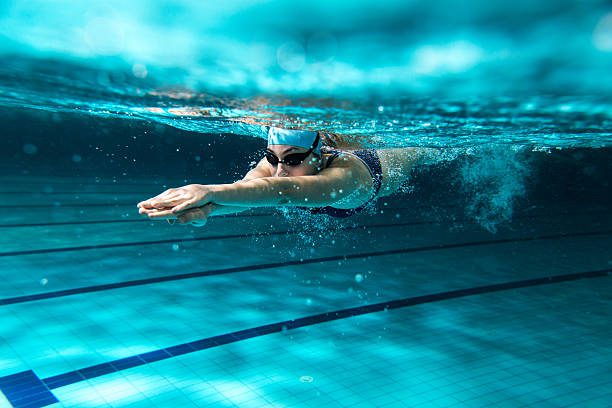
Competitive swimming has always been a sport obsessed with marginal gains – shaving hundredths of a second off a finish time, adjusting hand entry angles, tweaking turns by millimeters. But in the last five or six years, something genuinely different has been happening underneath the surface. Coaches and sports physiologists have started treating breathing itself as a performance variable, not just a biological necessity. And the results, honestly, have been kind of staggering.
The viewership numbers around major swimming events have surged too – it’s not just hardcore fans anymore. People who spend their evenings tracking everything from football stats to using a https://crazytime.com/tracker/ or live gambling sessions have started tuning into FINA World Championships, drawn in by the drama of records falling in events that haven’t moved in a decade. The 2023 World Aquatics Championships in Fukuoka alone saw six individual world records broken. That’s not normal. Something has clearly shifted.
What Actually Changed – And When
The shift started picking up real momentum around 2018–2019, when a handful of elite programs, particularly in Australia and the United States, began restructuring how they approached hypoxic training. Hypoxic sets – workouts where athletes deliberately restrict their breathing frequency – aren’t new. Coaches have used them since the 1970s. What changed is the science behind them and how precisely they’re now being applied.
Old-school hypoxic training was pretty blunt. Coaches would tell swimmers to breathe every five or seven strokes and call it done. Modern programs now monitor blood oxygen saturation in real time during sets, track CO2 tolerance thresholds individually, and adjust breathing patterns based on actual physiological response, not just guesswork.
The CO2 Tolerance Factor
Here’s something most casual fans don’t realize: the burning sensation swimmers feel in their lungs during a race isn’t from lack of oxygen. It’s from CO2 buildup. The body triggers its panic response when carbon dioxide rises, not when oxygen drops. So training CO2 tolerance – teaching the body to stay calm and functional under elevated CO2 – is actually more relevant to race performance than simply improving aerobic capacity.
Leon Marchand, who demolished Michael Phelps’ 400m individual medley world record at the 2023 World Championships (finishing in 4:02.50, compared to Phelps’ 4:03.84 set back in 2008), has spoken openly about the CO2 tolerance work built into his training under coach Bob Bowman. His breathing patterns during butterfly legs are noticeably different from swimmers a generation earlier – fewer breaths, better timed, less head lift disrupting his stroke.
Specific Techniques That Are Actually Being Used
This isn’t theoretical. These are the methods showing up in elite programs right now:
- Structured hypoxic ladders – Athletes swim repeat sets breathing every 3 strokes, then 5, then 7, progressively extending CO2 exposure while maintaining stroke quality. The adaptation over a 12-week training block measurably raises the threshold at which panic breathing kicks in.
- Diaphragmatic breathing activation drills performed on land before water sessions, specifically targeting the diaphragm rather than chest breathing. This improves oxygen uptake efficiency per breath, meaning swimmers get more from each breath they do take.
- Bilateral breathing enforcement in freestyle training – breathing alternately to both sides every three strokes rather than always to one preferred side. This forces better rotational balance and, over time, reduces the head-lift disruption that bleeds speed on every breath cycle.
What the Data Actually Shows
Katie Ledecky’s 800m freestyle world record, set at the 2016 Rio Olympics (8:04.79), still stands. But her training logs from 2022–2023, discussed in interviews with her coach Greg Meehan, show a meaningfully restructured breathing protocol compared to her earlier career. The focus shifted toward reducing breathing frequency in the middle 400m of the race – the “dead zone” where most swimmers lose rhythm.
Caeleb Dressel, during his record-breaking 2021 Tokyo Olympics campaign, reportedly trained with breathing restricted to every four strokes in sprint freestyle sets, despite the 50m and 100m being events where some swimmers breathe as frequently as every stroke. The controlled breath pattern reduced drag and maintained stroke tempo more consistently under fatigue.
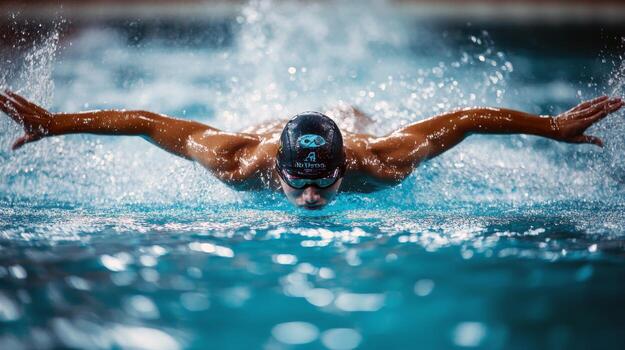
Why This Matters for the Sport Going Forward
A few things make this genuinely interesting beyond just the records:
- Younger swimmers are being introduced to CO2 tolerance training earlier – some national programs now start structured hypoxic work with athletes as young as 15 or 16, building tolerance before technique habits fully calcify.
- The technology gap is closing – wearable SpO2 monitors and underwater breath-tracking systems that were research-lab expensive five years ago are now accessible to mid-tier national programs, spreading the methodology beyond just the elite few.
The honest reality is that swimming’s record books had been unusually quiet for most of the 2010s after the polyurethane suit era ended. The sport needed something real to shake things up again. It turns out that something was hiding in plain sight – in the rhythm of every breath a swimmer takes. The physiologists figured it out before anyone else noticed, and now the stopwatches are finally catching up.