
Collecting valuable resources is one of the core reasons people play games. Whether you are grinding crafting materials in an MMORPG, building up reserves in a city-builder, or looting dungeons in a tabletop RPG, accumulated wealth creates a sense of progress and security. Resources represent options, the ability to handle whatever challenge comes next.
The same dynamic appears in specialized corners of entertainment, including casino games. A recently published guide intended to help players discover reputable online casinos notes that most online casinos run point-based loyalty programs that reward player engagement and return tangible value, such as free spins, cashback, and status upgrades. These systems work because they give players meaningful reasons to stay engaged rather than simply accumulate and sit on their balance.
But across all of these contexts, a familiar problem surfaces: the hoarding instinct. Some players collect rewards, stack up points or gold, and then refuse to spend any of it. The resources pile up, unused, while the player clings to them as a psychological safety net.
Understanding why that instinct exists and how to design around it is what separates good game design from frustrated players staring at a number that keeps growing but never moves.
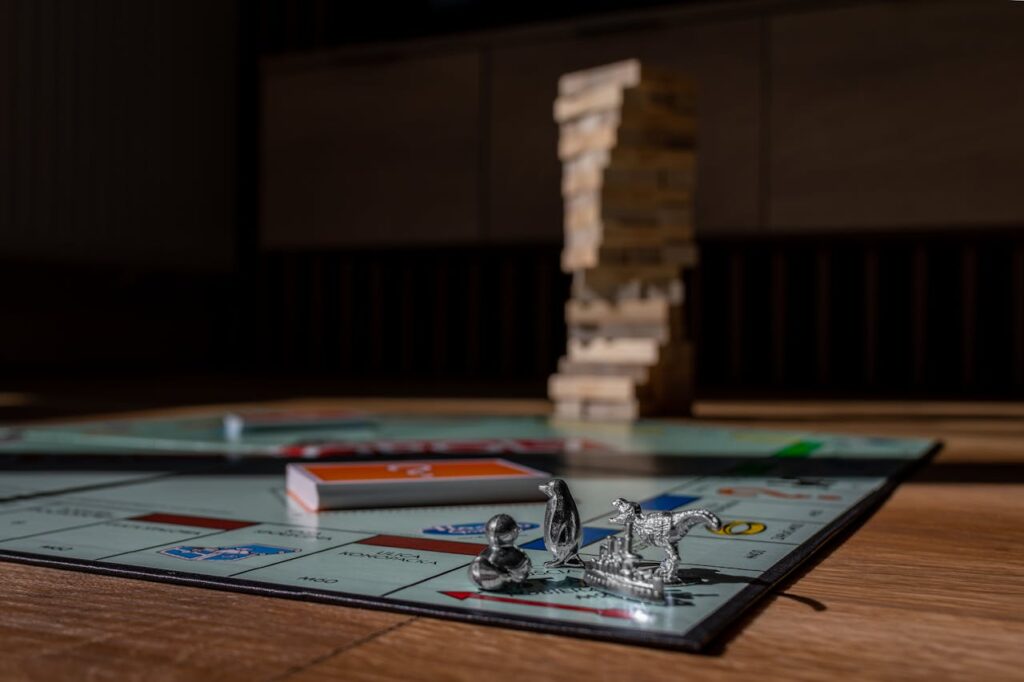
The Hoarding Problem Every DM Recognizes
Ask any experienced Dungeon Master, and they will describe the same scene. The party has accumulated a small fortune. They are carrying rare potions from three levels ago, a scroll no one has ever seriously considered using, and enough gold to fund a small army.
And they will not touch any of it. An opportunity arises, a powerful weapon for sale, a chance to hire skilled allies, a way to bribe a critical NPC, and the party hesitates, deliberates, and ultimately passes.
This is not a quirk of a particular group. It is a near-universal behavior pattern at the table. Players treat unspent resources as insurance against future uncertainty, and unless the game design actively counters that instinct, hoarding becomes the default mode. The problem compounds over time: the larger the hoard, the more psychologically painful any individual expenditure feels, and the more reluctant players become to spend anything at all.
What a Gold Sink Is (And What It Is Not)
The term gets thrown around loosely, so it is worth defining clearly. A gold sink is a designed mechanic that gives players a compelling reason to spend accumulated wealth. That is the complete definition. It is not a tax. It is not a punishment.
The mechanic’s emotional framing determines everything. When spending feels like a loss, something taken away, players resist.
When spending feels like an investment, an upgrade, or a story beat (something gained), players engage willingly. The mechanical outcome might be identical in both cases, but the psychological experience is completely different. A DM who understands that distinction is already ahead of the majority of the common mistakes in this area.
Why Most DMs Get It Wrong
The most common failure mode is the arbitrary gold sink, a sudden tax collector arrives, a fire destroys the inn where the party stored their equipment, or a thief lifts a portion of their coin.
These events strip wealth from players without offering meaningful choices, triggering resentment rather than engagement. Players do not feel they spent their gold; they feel it was taken from them, and that distinction matters enormously to how they respond.
Punitive sinks are another frequent mistake. When gold loss is tied to failed rolls or bad luck rather than deliberate decisions, it feels unfair. Players who lose wealth through circumstances outside their control do not learn to spend more freely; they learn to hoard more aggressively as a buffer against future arbitrary losses.
The Psychology Behind Hoarding at the Table
Loss aversion is the most significant driver. Behavioral research has consistently shown that the pain of losing something is roughly twice as powerful as the pleasure of gaining something of equal value.
At the game table, this means spending 500 gold feels worse than finding 500 gold feels good, even when the rational outcome is identical. Players are not being irrational; they are responding to a deeply ingrained psychological pattern.
The endowment effect amplifies this. Once players have gold in their possession, they assign it a higher subjective value than they would assign to a hypothetical future reward of the same amount. Combined with genuine uncertainty about what challenges lie ahead, this creates a powerful triple lock on spending behavior. Players think: I have this now, losing it will hurt, and I do not know what I will need it for later.
Gold Sinks That Work in 2026
Player-driven investment is consistently the most effective approach. When the party can fund a guild headquarters, back a struggling merchant’s business, or commission the construction of a stronghold, they are not spending gold; they are building something.
The expenditure feels generative rather than reductive, and the visible results in the game world create ongoing emotional investment in the decision they made.
Reputation and social capital systems work for similar reasons. Gold spent to buy influence with a faction, secure an alliance, or establish a political relationship produces narrative returns that feel proportionate to the cost. Timed opportunities create urgency that disrupts the default tendency to defer.
When a rare merchant is only in town for one session, or a political window closes at the end of the arc, the cost of hoarding becomes concrete and immediate rather than abstract.
Personalized hooks are the highest-value tool available: when an expenditure connects directly to a character’s backstory, like funding the search for a missing sibling, buying back a family heirloom, or securing the release of an old mentor.
How to Read Your Party and Tailor the Approach
Min-maxers hoard because they see gold as a mechanical resource with potential future utility. They respond best to sinks that offer clear, quantifiable returns: a stronghold that generates income, a hireling whose stats are explicitly defined, a magic item upgrade with measurable effects. For this group, the return on investment needs to be legible.
Roleplayers often hoard not out of calculated caution but because they simply do not think about the economy between sessions. They respond to narrative prompts, an NPC who specifically needs their help, and a story development that makes a particular expenditure feel inevitable.
Identifying which type of group you are running, or which combination of both, lets you select the right sink at the right moment rather than applying a generic solution that only works for half the table.
Making Spending Feel Like Winning
The fundamental shift required is reframing the entire transaction. In most games, the default mental model treats spending as subtraction: you had X, now you have less. The goal of effective gold sink design is to replace that model with one where spending is addition: you made a choice, and the world is now different because of it.
When a party funds a rebellion and later watches that rebellion succeed, the gold they spent feels like a victory they earned. When they buy a ship, and that ship becomes the base of operations for the next three arcs, the expenditure becomes a story asset rather than a lost number on a character sheet.
When they bribe a duke and that political leverage pays off in a critical scene, they spend it as a clever strategy. Gold sinks work when spending produces visible, meaningful change in the world the players care about. When that connection is strong enough, hoarding stops being the default instinct, because sitting on a pile of gold starts to feel like a missed opportunity rather than a safe choice.