
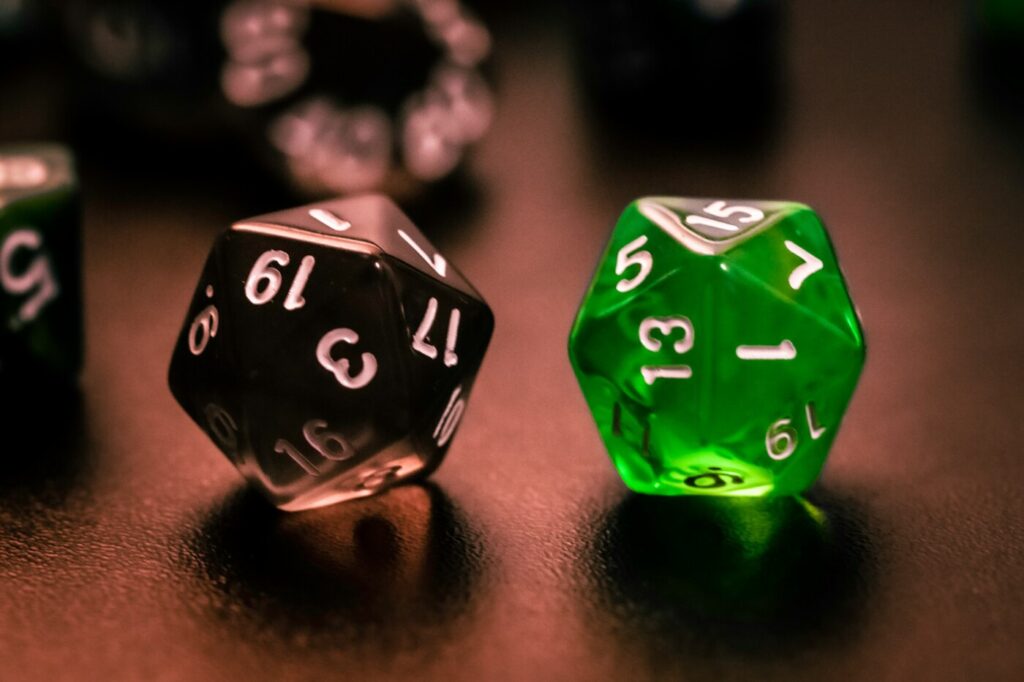
Every table has had that moment: a natural 20 against the final boss, or a devastating nat 1 at the exact worst time, and the whole table reacting like something genuinely significant just happened. That reaction isn’t really about the number on the die — it’s about variable reward psychology, the same mechanism that makes a slot reel or a hand of cards compelling in an entirely different context.
The d20 Is Doing More Work Than Most DMs Give It Credit For
D&D’s critical hit system exists specifically to create unpredictable spikes on top of an otherwise fairly grindable combat system, and it works for the same underlying reason a jackpot symbol landing on a slot reel works: unpredictable, high-variance outcomes generate stronger engagement than steady, predictable ones. Research in behavioral psychology has consistently backed this up, and game designers have leaned on it intuitively for decades, whether they’re building a d20 system, a loot table, or a casino floor.
Baldur’s Gate 3 made this dynamic unusually visible to a mainstream audience. Failed dice rolls regularly produced better roleplay moments than clean successes would have, since an unexpected outcome pushed a scene somewhere messier and more interesting than the scripted version ever could. The game peaked at over 875,000 concurrent players on Steam, and visible dice mechanics became one of the things players talked about most after launch — proof that the appeal of watching chance play out isn’t a niche tabletop quirk, it translates directly to a mainstream digital audience too.
D&D Already Has Gambling Built Into It, Literally
This isn’t just a structural parallel either. Dungeons & Dragons has actual in-game gambling minigames — Three Dragon Ante being the best-known example — that let characters wager gold or items using dice-based mechanics lifted almost directly from real-world games of chance, the same kind you can find here in a very different setting. A rogue character talking their way into a high-stakes card game inside a campaign isn’t borrowing a theme from gambling culture; it’s running an actual probability-based wagering mechanic at the table, just reskinned with a fantasy setting around it.
The gambler’s fallacy shows up at actual gaming tables too, not just casino floors. Plenty of players convince themselves a string of bad rolls means a good one is “due,” the same flawed reasoning that shows up constantly in real gambling behavior, even though a d20 has exactly the same 5% chance of a nat 20 on every single roll regardless of what came before it.
Loot Tables Run on the Exact Same Logic as a Casino Floor
Random treasure tables, wandering monster encounters, and procedural NPC generators have survived decades of tabletop design specifically because they make exploration feel unpredictable in a way scripted content never quite manages. That’s structurally identical to what a slot machine or a card game at a sweepstakes casino is doing: creating uncertainty around what’s coming next, since the uncertainty itself is a meaningful part of the appeal rather than an obstacle to it.
Tribality has covered this exact overlap in more depth in Randomness in Tabletop Design: How Chance Mechanics Shape Player Experience, which walks through how tabletop RPGs, loot systems, and casino-style games all lean on the same underlying chance mechanics to shape how players react to risk and reward, even though the settings couldn’t look more different on the surface.
Where the Comparison Actually Breaks Down
None of this means a d20 roll and a hand of blackjack are functionally identical activities, and the differences matter. A bad roll in D&D costs narrative momentum or, at worst, a character’s life within the fiction. A hand at a sweepstakes casino, even played with the entertainment-only Gold Coin currency most platforms use, sits inside a system specifically built around eventually converting a separate currency into real prizes. The dice mechanics feel similar because the underlying psychology is genuinely shared, but the stakes attached to the outcome are not, and that distinction is worth keeping clear regardless of how familiar the randomness itself feels.
Why Tabletop Players Understand This Better Than Most
Years at the table tracking probability, calling out an unlikely string of crits, arguing about whether exploding dice actually change expected damage output — all of that builds a genuinely useful intuition for how randomness actually behaves, as opposed to how it feels in the moment. That instinct transfers directly to evaluating any other chance-based format, sweepstakes casino games included: understanding that variance, not fairness, usually explains a bad run, and that no amount of pattern-spotting changes a genuinely random system’s underlying odds.
The Bigger Picture
Chance has always been half the appeal of a good tabletop session, right alongside the strategy and the storytelling, and that appeal doesn’t stay contained to the game table. The same reward structure that makes a critical hit land harder than a routine success is doing identical work everywhere else games lean on randomness, tabletop and beyond, whether the dice are physical, digital, or dealt across a virtual table entirely.