
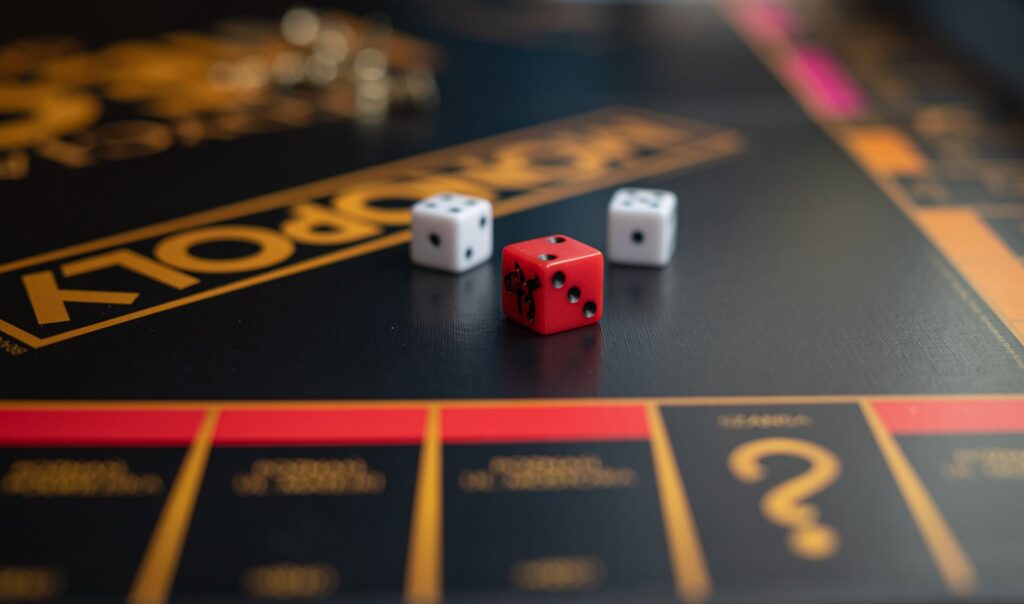
The word game is a very broad term. It connects someone playing Dungeons & Dragons in their room, someone playing poker at a casino and someone playing online slots. Arguably even sports are games, although that is a different argument. However, among the common threads that unite all kinds of games from boards to screens to cards and reels, luck and strategy are two of the most important.
Others include decision making, progression and reward and entertainment value – all of which combine to make something that resonates with players, whether that’s a casino slot or an epic board game. However, these distinctions aren’t just important for gaming nerds and encyclopedia writers. In the modern day, determining exactly what turns a game into gambling can be an important question in the eyes of the law – with potentially hundreds of millions of dollars on the line.
Luck and Strategy are the Pillars of Gaming
Broadly, you can classify almost any game along a spectrum of luck and skill. For example in a slot game there is no skill in particular (there may be some in picking the right slot game, but that’s another story). You simply press the button and get a random result.
On the other end of the scale you have chess. The outcome of a game of chess is entirely dependent on who has more skill. White pieces have a tiny statistical edge when both players play perfectly – but for the vast majority of players that isn’t a problem.
All other games fall somewhere between the two – such as this insane chess-themed RPG.
For a less unusual example, poker is a luck-based game on any individual hand. However, over time a skill edge will make a difference in who wins.
This combination of luck and skill is excellent for encouraging players back to a game, because even new and not very skilled players can occasionally win through luck.
Digital Reward Loops and Variable Reinforcement
Another concept that runs across many kinds of games is variable reinforcement. You can see this in board games that use Chance cards or rolling dice as a core mechanic like in D&D but it is most common in casino games, or games like them.
Variable reinforcement keeps players interested and engaged because they never know when the next reward might come. Without a fixed pattern, human brains look to close the unfulfilled loop and will encourage repeated behaviors until it is satisfied.
The most obvious example is a slot game. However, variable reinforcement can also be seen particularly in social media feeds where people will scroll for a long time just to find the one post that engages them emotionally.
In one interesting study of a social casino (that is site offering casino-style slots games but only for play money coins) researchers observed 234 customers playing these games. Some of those observed were offered a potential extra bonus on their custom slot game that might trigger during their play. After players ended their sessions the researchers offered players the opportunity to swap their virtual coins for actual cash, only they were told they had to visit a real-money casino and gamble with it afterward.
The research found that those who were offered a potential extra bonus on the social slot game – no real money involved – played for longer and used more of their bank of play money coins. However, they were not any more likely to take up the subsequent offer of actual gambling.
The conclusion was that the structural characteristics of the game only affected their gameplay, and not subsequent decisions.
Social and Sweepstakes Casinos – What’s the Difference?
When classifying games of chance and skill, gambling is the obvious sticking point in many ways.
Consider ACE social sweepstakes casino, which has an expansive game selection including titles by the same developers you’d see at a real-money casino. Players visit these sites purely for the entertainment of the game itself, and the reward of winning virtual coins, over the potential monetary reward at a full casino.
That is a social casino. It is marketed as entertainment, and players go in with that expectation.
A sweepstakes casino, on the other hand, uses half of this business model and then adds free Sweepstakes coins when users buy Gold Coins. Players can cash out the Sweepstakes coins for real dollars if they use them, or they can simply play the virtual coins games.
Because the Sweeps coins that can be redeemed for cash are free and never directly sold to players (you can also often get them for free through social media offers or even the post) this isn’t technically considered gambling in many US states. Even if 90% of players in some surveys say they consider it gambling.
Regardless, this legal loophole allowed the model to spread quickly across the US for a few years, and sweeps casinos quickly grew to a multi-billion-dollar yearly business. Despite regulatory challenges slowing the sector, they remain popular operations.